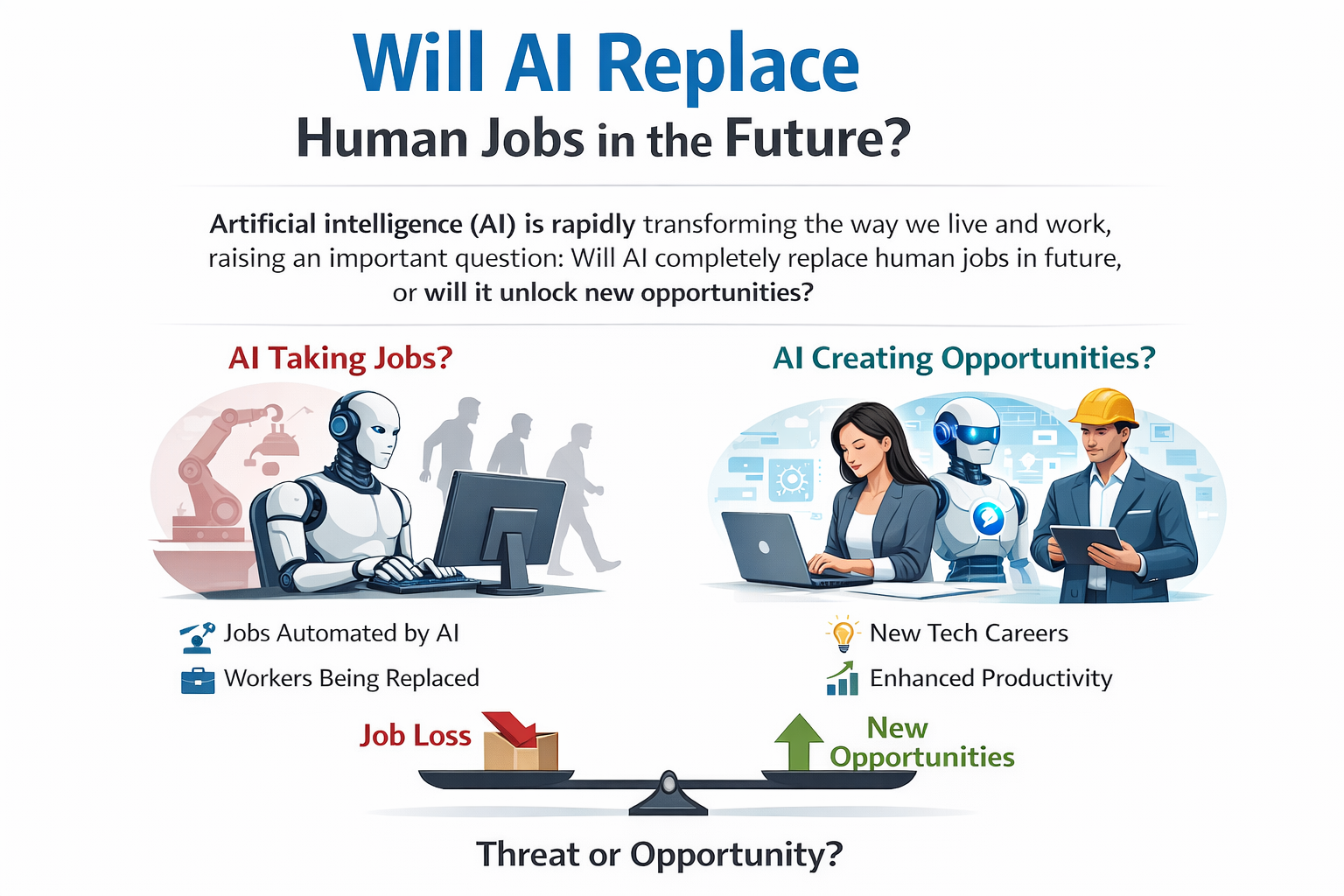
Will AI replace human jobs in future? That’s the million-dollar question people keep asking in offices, classrooms, and boardrooms. Artificial intelligence, often called AI, is no longer science fiction. It’s here. From chatbots to self-driving systems, it’s transforming how we live and work.
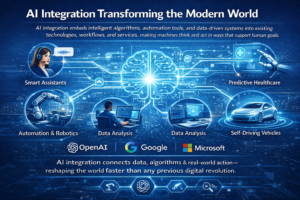
In simple terms, AI refers to machines or software that can learn, think, and make decisions. Tools developed by organizations like OpenAI and tech giants such as Google have accelerated innovation at lightning speed.
As AI systems grow smarter, many workers worry: Will AI replace human jobs in future completely? Or will it create new opportunities? Let’s break it down carefully.
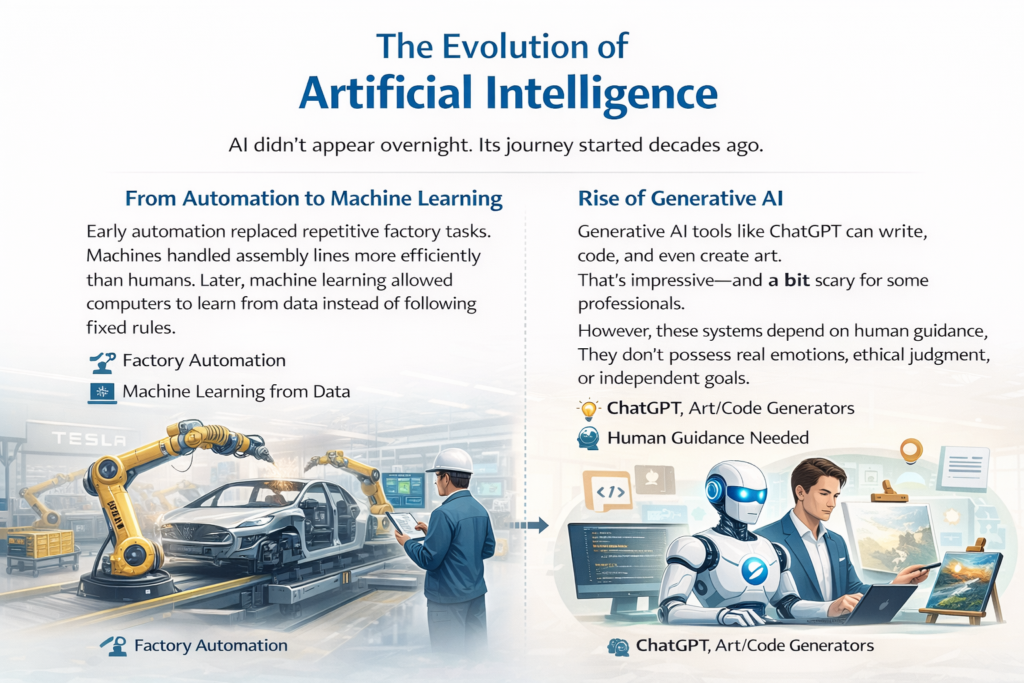
The Evolution of Artificial Intelligence
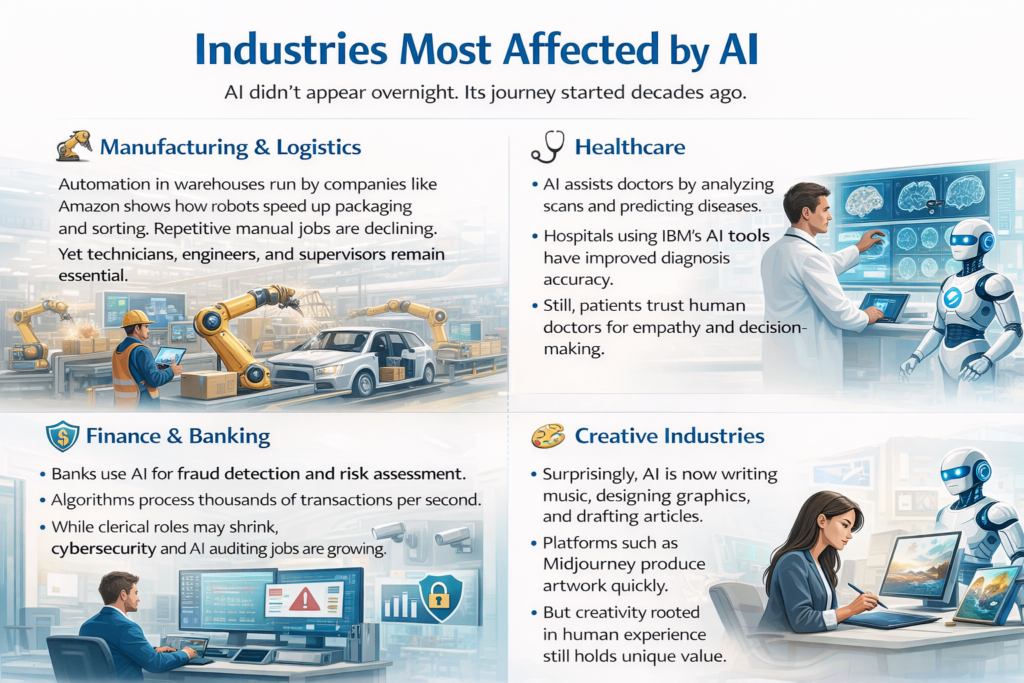
AI didn’t appear overnight. Its journey started decades ago.
From Automation to Machine Learning
Early automation replaced repetitive factory tasks. Machines handled assembly lines more efficiently than humans. Later, machine learning allowed computers to learn from data instead of following fixed rules.
For example, in manufacturing plants owned by companies like Tesla, robots assemble vehicles with precision. But humans still oversee operations.
Rise of Generative AI
Generative AI tools like ChatGPT can write, code, and even create art. That’s impressive—and a bit scary for some professionals.
However, these systems depend on human guidance. They don’t possess real emotions, ethical judgment, or independent goals.
Industries Most Affected by AI
Manufacturing & Logistics
Automation in warehouses run by companies like Amazon shows how robots speed up packaging and sorting. Repetitive manual jobs are declining. Yet technicians, engineers, and supervisors remain essential.
Healthcare
AI assists doctors by analyzing scans and predicting diseases. Hospitals using IBM’s AI tools have improved diagnosis accuracy. Still, patients trust human doctors for empathy and decision-making.
Finance & Banking
Banks use AI for fraud detection and risk assessment. Algorithms process thousands of transactions per second. While clerical roles may shrink, cybersecurity and AI auditing jobs are growing.
Creative Industries
Surprisingly, AI is now writing music, designing graphics, and drafting articles. Platforms such as Midjourney produce artwork quickly. But creativity rooted in human experience still holds unique value.
Jobs at High Risk of Automation
So, will AI replace human jobs in future for everyone? Not exactly. But some jobs are more vulnerable:
- Data entry clerks
- Telemarketers
- Cashiers
- Routine factory workers
- Basic bookkeeping roles
These positions involve repetitive tasks, making them easier to automate.
Jobs That AI Is Creating
Here’s the twist. AI isn’t just replacing jobs—it’s creating them.
New roles include:
| Job Title | Description |
|---|---|
| AI Trainer | Teaches AI systems |
| Data Scientist | Analyzes complex data |
| AI Ethics Specialist | Ensures fairness |
| Robotics Engineer | Designs automation systems |
| Cybersecurity Analyst | Protects AI systems |
According to research from World Economic Forum, millions of new technology-driven jobs are emerging worldwide.
Human Skills AI Cannot Replace
Let’s be honest—AI is powerful. But it’s not human.
Skills that remain irreplaceable include:
- Emotional intelligence
- Critical thinking
- Leadership
- Complex problem-solving
- Creativity with lived experience
A machine can calculate faster than us. Yet it can’t truly care. It can simulate empathy, but it doesn’t feel it.
The Economic Impact of AI
Productivity Boost
AI improves efficiency. Companies produce more with fewer errors. This boosts profits and economic growth.
Wage Polarization
However, there’s a downside. High-skilled workers earn more, while low-skilled workers may face job displacement. That creates inequality challenges.
Governments and businesses must manage this transition carefully.
Education and Skill Transformation
To answer “Will AI replace human jobs in future?”, we must consider education.
Schools and universities are adapting. Coding, data analysis, and digital literacy are becoming core subjects.
Online platforms like Coursera offer AI-related courses for beginners and professionals alike.
Upskilling is no longer optional—it’s essential.
Government and Policy Response
Governments worldwide are introducing AI regulations. The European Union has proposed AI laws focused on safety and ethics.
Policies aim to:
- Protect worker rights
- Encourage innovation
- Prevent misuse
- Promote reskilling programs
Balanced regulation ensures AI benefits society without causing harm.
Ethical Concerns and AI Responsibility
Ethics matter. AI systems can reflect bias if trained on biased data.
Experts emphasize:
- Transparency
- Accountability
- Human oversight
- Fair data practices
Organizations investing responsibly will build public trust.
Will AI Replace Human Jobs in Future? A Balanced Analysis
Now, let’s directly address the core question again: Will AI replace human jobs in future?
The short answer: Partially—but not entirely.
AI will replace certain repetitive jobs. It will transform many others. But it will also create new industries we can’t yet imagine.
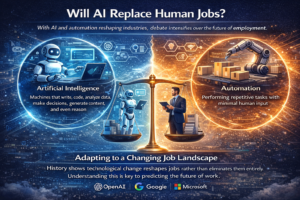
History teaches us something important. During the Industrial Revolution, machines replaced manual labor. Yet new jobs emerged. The same pattern is happening now.
The future of work isn’t humans versus AI. It’s humans with AI.
Frequently Asked Questions (FAQs)
1. Will AI replace human jobs in future completely?
No. While AI will automate repetitive roles, many jobs requiring emotional intelligence, creativity, and leadership will remain human-driven.
2. Which industries are safest from AI?
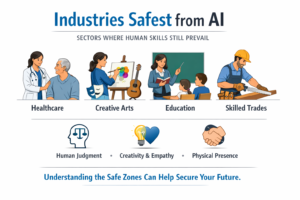
Healthcare caregiving, education leadership, psychology, and creative arts remain less vulnerable due to human interaction needs.
3. How can workers prepare for AI changes?
Focus on upskilling in digital tools, communication, adaptability, and problem-solving skills.
4. Is AI creating more jobs than it destroys?
According to the World Economic Forum, AI is expected to create millions of new roles globally, though transitions may be challenging.
5. Should students fear AI?
Not at all. Students who embrace technology will likely find better opportunities in emerging industries.
6. Can AI think like humans?
AI can simulate thinking using algorithms, but it doesn’t possess consciousness, emotions, or self-awareness.
7. Will small businesses suffer from AI adoption?
Small businesses can benefit greatly by using affordable AI tools to automate marketing, customer support, and data analysis.
Conclusion: A Future of Collaboration, Not Replacement
So, will AI replace human jobs in future? The truth is more nuanced than headlines suggest.
AI is a powerful tool. It’s reshaping industries, improving productivity, and creating opportunities. Yes, some jobs will disappear. But new roles will rise.
The real challenge isn’t AI itself—it’s how we adapt. If workers, educators, businesses, and governments collaborate wisely, AI can become a partner rather than a threat.
The future belongs to those who learn, adapt, and innovate. Instead of fearing AI, we should prepare for it—and grow alongside it.