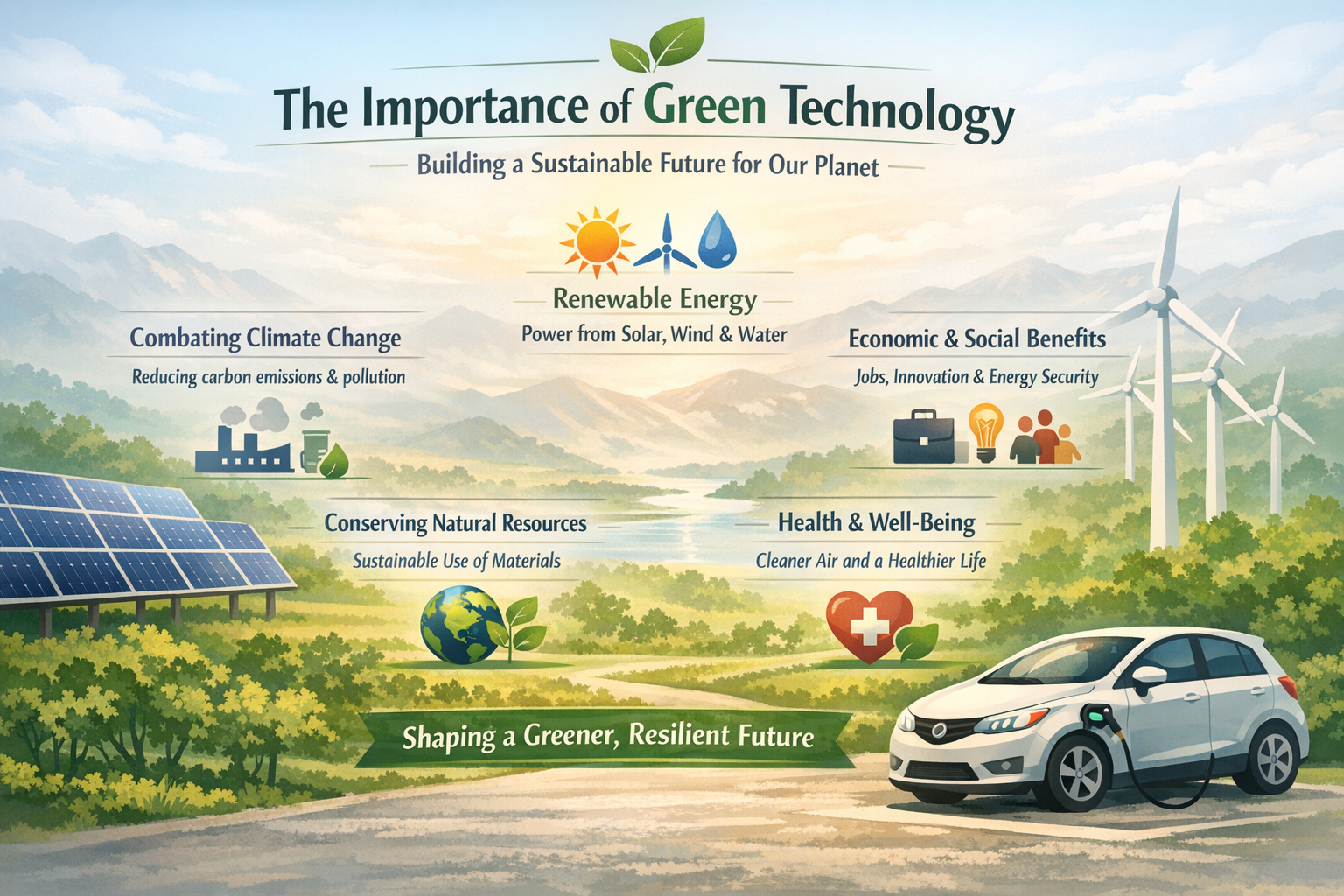
Why is green technology important? That question is no longer theoretical—it’s urgent. In the first decade of the 21st century, environmental concerns moved from scientific debate to everyday conversation. Today, climate change, pollution, and energy shortages affect communities across the globe. Green technology stands at the center of the solution.
Green technology, also called clean technology or environmental technology, focuses on creating products and systems that reduce negative impacts on the environment. Unlike traditional industrial methods, green solutions aim to preserve natural resources while still supporting economic growth. That balance is crucial.
In recent years, governments, businesses, and individuals have begun to embrace sustainable innovation. Solar panels are appearing on rooftops. Electric vehicles are becoming common on highways. Wind farms are reshaping rural landscapes. These developments aren’t random—they reflect a global shift toward sustainability.
But why is green technology important beyond environmental slogans? The answer lies in its wide-reaching impact. It influences economies, public health, energy security, and social equality. Moreover, it shapes the future of industries and global competitiveness.
Green technology also supports long-term resilience. Instead of exhausting resources, it encourages efficiency and renewal. For example, renewable energy systems draw power from sources that won’t run out, such as sunlight and wind. That’s not just smart—it’s essential.
As environmental challenges intensify, innovation becomes a necessity rather than a luxury. So, let’s explore in depth why green technology is important and how it’s transforming our world in powerful ways.
What Is Green Technology? Clear Definition and Core Principles
Green technology refers to the design and application of products, equipment, and systems that conserve natural resources and reduce environmental harm. Its main goal is sustainability—meeting today’s needs without compromising future generations.
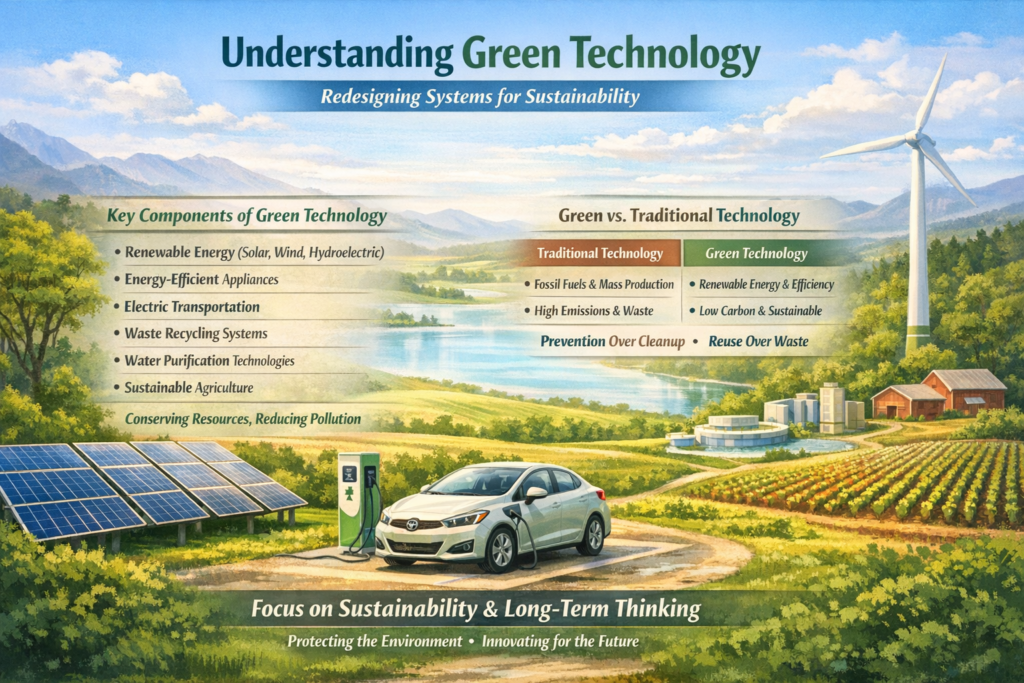
Key Components of Green Technology
Green technology includes several major areas:
- Renewable energy (solar, wind, hydroelectric)
- Energy-efficient appliances
- Electric transportation
- Waste recycling systems
- Water purification technologies
- Sustainable agriculture tools
These components work together to lower carbon emissions and reduce pollution. Importantly, green technology focuses on prevention rather than correction. Instead of cleaning up pollution after it occurs, it minimizes waste from the start.
How Green Technology Differs from Traditional Technology
Traditional technology often prioritizes production speed and profit over environmental concerns. Fossil fuels, heavy industrial manufacturing, and mass consumption models have contributed to economic growth—but at a cost.
Green technology flips the script. It integrates environmental responsibility into innovation. Efficiency becomes the norm. Renewable resources replace limited ones. Waste is treated as a reusable asset rather than discarded material.
For instance, according to the <a href=”https://www.iea.org” target=”_blank”>International Energy Agency</a>, renewable energy capacity has expanded dramatically in the past decade. That growth reflects both environmental awareness and economic opportunity.
So when asking why is green technology important, understanding its foundational principles provides clarity. It’s not just about going “green.” It’s about redesigning systems for sustainability and long-term stability.
Why Is Green Technology Important for the Environment?
Environmental protection remains the strongest reason why green technology is important. The planet faces multiple threats, including climate change, deforestation, water scarcity, and biodiversity loss.
Climate Change Mitigation
Burning fossil fuels releases greenhouse gases that trap heat in the atmosphere. Over time, this causes global temperatures to rise. Green technology addresses this issue by replacing fossil fuels with renewable energy sources.
Solar and wind power generate electricity without emitting carbon dioxide. Electric vehicles reduce reliance on gasoline. Smart grids improve energy efficiency.
These solutions collectively lower carbon footprints. And frankly, that’s a big deal.
Reducing Pollution and Waste
Air pollution contributes to respiratory diseases and environmental damage. Water pollution harms aquatic life and contaminates drinking supplies. Traditional industrial processes generate significant waste.
Green technology introduces cleaner production methods. Recycling systems reduce landfill waste. Biodegradable materials replace plastics. Waste-to-energy plants convert garbage into usable power.
Small improvements add up. Over time, cleaner systems protect ecosystems and human communities alike.
Protecting Biodiversity
Forests, oceans, and wetlands support countless species. However, habitat destruction threatens biodiversity worldwide.
Sustainable forestry practices, eco-friendly farming, and renewable energy installations minimize ecological disruption. By protecting habitats, green technology ensures that wildlife can thrive alongside human development.
In short, environmental preservation lies at the heart of why green technology is important.
Economic Benefits of Green Technology
While environmental protection is essential, economic growth matters too. Fortunately, green technology supports both.
Job Creation in Renewable Energy
The renewable energy sector creates millions of jobs globally. Solar panel manufacturing, wind turbine installation, and energy auditing services require skilled workers.
Green industries stimulate local economies. They also encourage technical education and workforce development.
Long-Term Cost Savings
Initially, green technology may seem expensive. However, long-term savings often outweigh upfront costs.
Energy-efficient appliances reduce electricity bills. Solar installations lower dependency on utility companies. Businesses save money by reducing waste and improving efficiency.
Over time, sustainable systems become financially advantageous.
Boosting Innovation and Competitiveness
Countries investing in green technology position themselves as leaders in emerging markets. Innovation drives competitiveness.
Electric vehicle production, sustainable construction materials, and battery storage technologies represent growing industries. Businesses that adapt early gain strategic advantages.
Therefore, from an economic perspective, why is green technology important? Because it fuels sustainable prosperity.
Social and Health Advantages of Green Technology
Environmental sustainability connects directly to human well-being.
Improved Public Health
Cleaner air reduces respiratory illnesses. Safer water systems prevent disease. Reduced chemical exposure lowers health risks.
Green technology contributes to healthier communities. Hospitals see fewer pollution-related cases. Healthcare costs decline.
Energy Access for All
Renewable energy systems provide electricity to remote areas without extensive infrastructure. Solar microgrids bring power to rural communities.
Energy access improves education, communication, and economic opportunities.
Sustainable Urban Development
Smart cities integrate green buildings, efficient public transportation, and renewable energy systems. Urban planning incorporates parks and green spaces.
These changes enhance quality of life. Cities become more livable and resilient.
Clearly, why is green technology important extends beyond environmental statistics—it touches daily human experience.
Green Technology in Everyday Life
Green technology isn’t confined to laboratories or policy documents. It’s already part of daily routines.
Green Homes
Energy-efficient lighting, insulation, and smart thermostats reduce consumption. Solar panels generate household electricity.
Homeowners benefit from lower bills and smaller carbon footprints.
Electric Vehicles
Electric cars produce zero tailpipe emissions. Charging infrastructure continues expanding worldwide.
As battery technology improves, electric vehicles become more affordable and practical.
Smart Agriculture
Precision farming uses sensors and data analysis to optimize water and fertilizer use. Sustainable farming practices protect soil health.
Food production becomes more efficient while reducing environmental impact.
These examples demonstrate that green technology is practical—not abstract.
Government Policies and Global Initiatives
Public policy plays a critical role in accelerating adoption.
International Climate Agreements
Global cooperation addresses climate challenges collectively. Agreements encourage emission reductions and renewable investments.
National Incentives and Subsidies
Governments offer tax credits, grants, and rebates for green technology adoption. These incentives lower financial barriers.
Policy frameworks ensure consistent progress toward sustainability goals.
Challenges Facing Green Technology
Despite its promise, green technology faces obstacles.
High Initial Costs
Upfront investment can discourage adoption. However, financing models and subsidies help offset expenses.
Technological Barriers
Energy storage and grid integration remain technical challenges. Research and development continue improving solutions.
Public Awareness Issues
Some communities lack information about sustainable options. Education and outreach programs are essential.
Addressing these challenges strengthens long-term impact.
Future Trends in Green Technology
The future looks promising.
AI and Smart Energy Systems
Artificial intelligence optimizes energy distribution. Smart grids balance supply and demand efficiently.
Circular Economy Models
Recycling, reuse, and remanufacturing reduce waste. Products are designed for longevity.
Innovation continues expanding possibilities. The transition isn’t instant—but it’s steady.
Frequently Asked Questions (FAQs)
1. Why is green technology important for future generations?
It preserves natural resources and ensures environmental stability for children and grandchildren.
2. Is green technology expensive?
Initial costs can be high, but long-term savings often compensate.
3. How does green technology reduce pollution?
It replaces fossil fuels, improves efficiency, and promotes recycling.
4. Can green technology create jobs?
Yes, renewable energy and sustainable industries generate employment opportunities.
5. What industries use green technology?
Energy, transportation, construction, agriculture, and manufacturing sectors all apply it.
6. How can individuals support green technology?
By using energy-efficient appliances, reducing waste, and supporting sustainable policies.
Conclusion: A Greener Path Forward
Why is green technology important? Because it protects the planet, strengthens economies, improves public health, and ensures long-term sustainability.
The transition to sustainable systems isn’t optional—it’s necessary. Environmental challenges demand innovative solutions. Green technology provides those solutions.
Although challenges remain, progress continues accelerating. Governments, businesses, and individuals all play roles in this transformation.
In the end, adopting green technology means choosing resilience over risk and sustainability over short-term gain. The path forward is clear—and it’s greener than ever.
Would you like me to also generate a high-converting Pinterest description and social media captions for this article?