
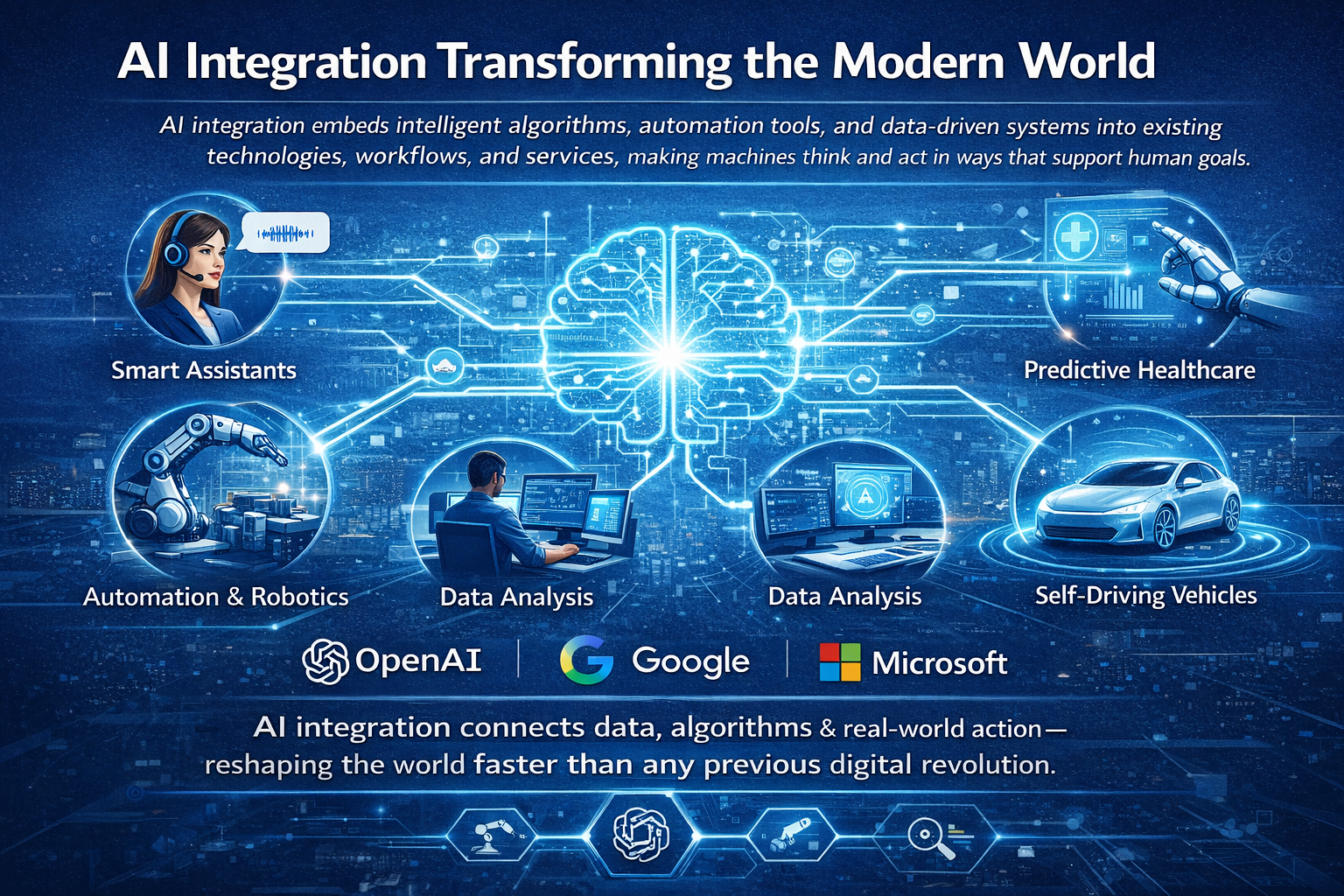
The integration of artificial intelligence refers to embedding intelligent algorithms, automation tools, and data-driven decision systems into existing technologies, workflows, and services. In simple terms, it means making machines think, learn, and act in ways that support human goals—an idea best understood when asking, what is integration of artificial intelligence and how it applies to real-world innovation.
Today, AI integration is no longer a futuristic concept; it is happening everywhere. From smart assistants to predictive healthcare tools, organisations across the globe are adopting AI to boost productivity, reduce costs, and improve user experiences. Major innovators such as OpenAI, Google, and Microsoft continue to accelerate this transformation.
Put simply, AI integration connects data, algorithms, and real-world action—and that powerful connection is reshaping the modern world faster than any previous digital revolution.
Understanding Artificial Intelligence Integration
Artificial intelligence on its own is powerful, but integration is what makes it useful. Integration means AI systems are woven into software, hardware, and decision-making processes rather than existing as isolated tools.
For example:
- A customer service chatbot linked to a company database
- A recommendation engine inside an e-commerce platform
- Predictive maintenance in industrial machines
These are real-world examples of the integration of artificial intelligence improving efficiency and accuracy.
Importantly, integration also enables continuous learning. AI systems analyse new data, refine predictions, and adapt to changing environments. That’s why integrated AI becomes more valuable over time.
Brief History of AI Adoption
AI research began in the mid-20th century, but early systems were limited by computing power and data availability. Over decades, three major breakthroughs enabled modern integration:
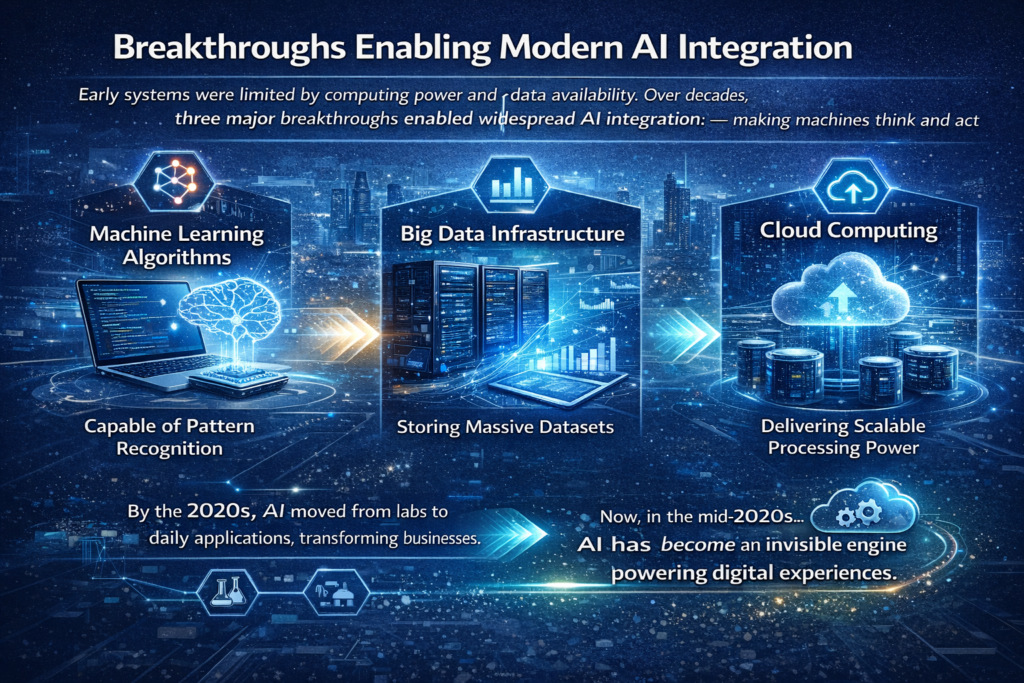
- Machine learning algorithms capable of pattern recognition
- Big data infrastructure storing massive datasets
- Cloud computing delivering scalable processing power
By the 2020s, AI moved from laboratories into everyday applications. Businesses began embedding AI directly into workflows rather than treating it as experimental technology.
Now in the mid-2020s, integration is the central focus—turning AI from a tool into an invisible engine running behind digital experiences.
Why AI Integration Matters Today
The world generates enormous amounts of data every second. Without AI, analysing this information would be nearly impossible.
AI integration matters because it:
- Converts raw data into actionable insights
- Automates repetitive decision processes
- Enhances speed, accuracy, and scalability
- Enables personalised user experiences
In competitive markets, organisations that fail to integrate AI risk falling behind. Meanwhile, those embracing integration gain measurable advantages in productivity and innovation.
Key Technologies Behind AI Integration
Several core technologies power the integration of artificial intelligence:
Machine Learning (ML)
Allows systems to learn patterns from data without explicit programming.
Natural Language Processing (NLP)
Enables machines to understand and generate human language.
Computer Vision
Helps AI interpret images and videos.
Robotic Process Automation (RPA)
Automates repetitive digital tasks.
Together, these technologies form the backbone of intelligent digital ecosystems.
AI Integration in Business Operations
Businesses are among the biggest beneficiaries of AI integration. Intelligent systems now handle:
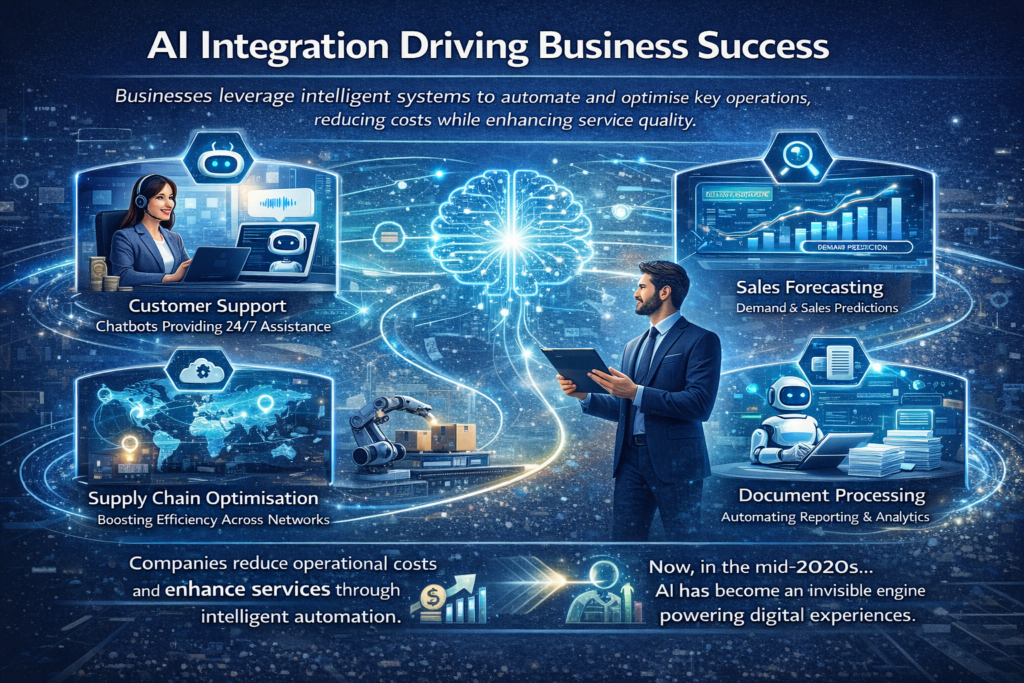
- Customer support through chatbots
- Sales forecasting and demand prediction
- Supply chain optimisation
- Document processing and analytics
As a result, companies reduce operational costs while improving service quality. AI doesn’t replace humans entirely—it augments decision-making, allowing employees to focus on creative and strategic work.
AI in Healthcare Transformation
Healthcare is experiencing one of the most profound AI revolutions.
Integrated AI systems can:
- Analyse medical images for early disease detection
- Predict patient risks using historical data
- Assist doctors in treatment planning
- Automate administrative paperwork
These capabilities lead to faster diagnoses, personalised treatments, and improved patient outcomes. While human oversight remains essential, AI integration dramatically enhances medical precision.
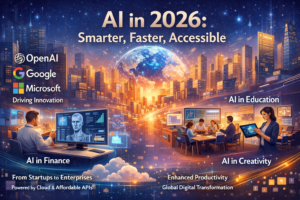
AI in Education Systems
Education is becoming more personalised thanks to AI.
AI-powered platforms can:
- Adapt lessons to individual learning speeds
- Provide instant feedback on assignments
- Recommend study resources
- Support remote learning environments
This integration helps students learn more effectively while enabling teachers to focus on mentorship rather than repetitive grading tasks.
AI in Finance and Banking
Financial institutions rely heavily on AI integration for:
- Fraud detection in real time
- Credit risk assessment
- Algorithmic trading
- Customer behaviour analysis
Because financial data is complex and high-volume, AI provides accuracy and speed impossible for manual systems.
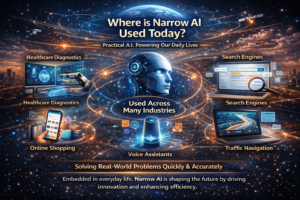
AI Integration in Daily Life
Even outside workplaces, AI integration shapes everyday experiences:
- Voice assistants managing schedules
- Streaming platforms recommending content
- Navigation apps predicting traffic
- Smart homes automating energy use
Many people interact with AI dozens of times daily—often without realising it.
Benefits of Integrating Artificial Intelligence
The integration of artificial intelligence delivers wide-ranging benefits:
- Efficiency: Automates repetitive tasks
- Accuracy: Reduces human error
- Scalability: Handles massive workloads
- Personalisation: Tailors user experiences
- Innovation: Enables new products and services
Collectively, these advantages drive digital transformation across industries.
Challenges and Ethical Considerations
Despite its promise, AI integration raises important concerns:
- Data privacy and security risks
- Algorithmic bias and fairness issues
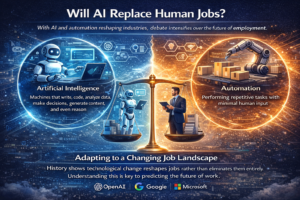
- Job displacement fears
- Lack of transparency in decision-making
Responsible governance, ethical design, and regulatory oversight are essential to ensure AI benefits society as a whole.
For broader global policy discussion, see the OECD’s AI principles:
https://oecd.ai/en/ai-principles
Future Trends in AI Integration
Looking ahead, several trends will shape the next phase of AI integration:
- Generative AI embedded in everyday software
- Autonomous systems in transport and logistics
- AI-driven scientific discovery
- Human-AI collaboration in creative work
As computing power grows, AI integration will become increasingly seamless—almost invisible yet deeply influential.
How Organisations Can Start AI Integration
Organisations beginning their AI journey should:
- Identify high-impact use cases
- Ensure strong data infrastructure
- Choose scalable AI platforms
- Train employees in AI literacy
- Implement ethical governance frameworks
A gradual, strategic approach leads to sustainable success.
Frequently Asked Questions
1. What is integration of artificial intelligence in simple terms?
It means embedding AI capabilities into existing systems so machines can analyse data, learn patterns, and support decisions automatically.
2. Why is AI integration important for businesses?
Because it improves efficiency, reduces costs, enhances customer experiences, and enables data-driven strategies.
3. Does AI integration replace human jobs?
Not entirely. It usually automates repetitive tasks while creating new roles focused on creativity, strategy, and technology management.
4. Which industries benefit most from AI integration?
Healthcare, finance, education, manufacturing, and retail are among the biggest beneficiaries.
5. Is AI integration expensive?
Costs vary, but cloud-based AI tools have made adoption more affordable for organisations of all sizes.
6. What is the future of AI integration?
AI will become more autonomous, personalised, and deeply embedded in daily life and business operations.
Conclusion
The integration of artificial intelligence is no longer optional—it is the foundation of modern digital transformation. By combining intelligent algorithms with real-world systems, AI enables faster decisions, smarter services, and entirely new possibilities across industries.
While ethical challenges remain, thoughtful implementation ensures AI serves humanity in meaningful and responsible ways. As technology continues to evolve, the organisations and individuals who embrace AI integration today will shape the opportunities of tomorrow.