
Artificial Intelligence has emerged as one of the most transformative technologies of the modern era. It is redefining how we work, communicate, learn, and make decisions. From intelligent assistants and recommendation systems to autonomous vehicles and advanced medical diagnostics, Artificial Intelligence (AI) is now deeply embedded in our daily lives. In this in-depth guide, we explore Artificial Intelligence in a structured, authoritative, and practical way to provide a complete understanding of its meaning, foundations, types, applications, and long-term impact.
What Is Artificial Intelligence
Artificial Intelligence refers to the capability of machines and computer systems to perform tasks that typically require human intelligence. These tasks include learning from data, reasoning, problem-solving, understanding natural language, recognizing images, making decisions, and adapting to new inputs.
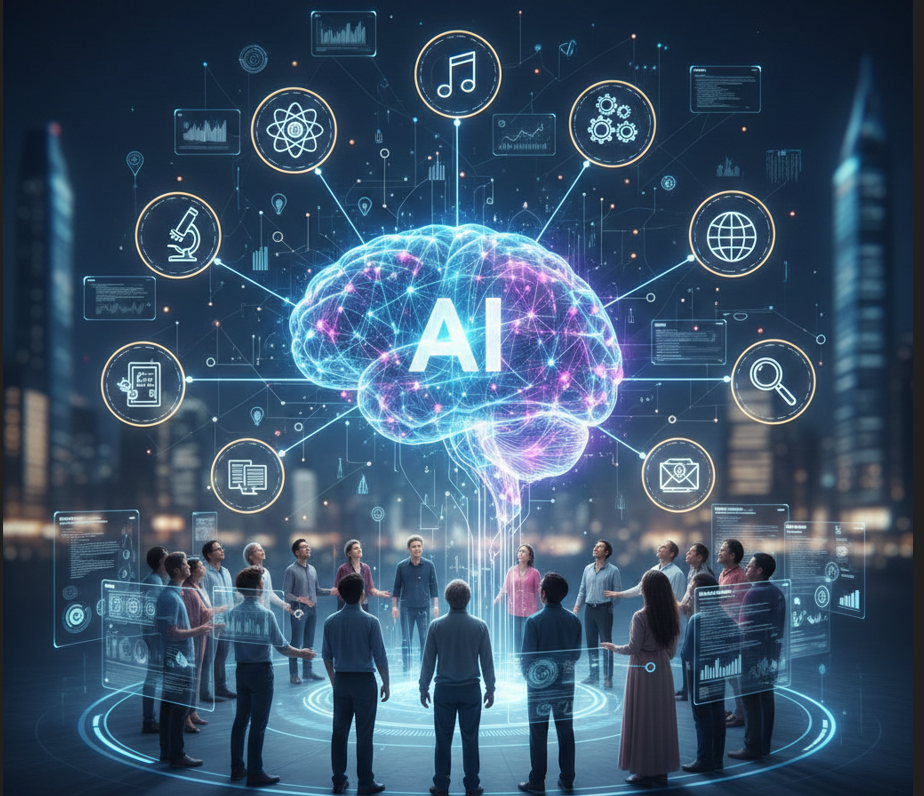
Unlike traditional software, which follows predefined rules, AI systems are designed to analyze data, identify patterns, and improve performance over time. This adaptive nature is what makes Artificial Intelligence fundamentally different from conventional computing.
At its core, Artificial Intelligence aims to simulate human cognitive abilities using algorithms, data, and computational power. The result is intelligent systems that can operate with speed, accuracy, and scalability far beyond human capacity.
Core Components of Artificial Intelligence
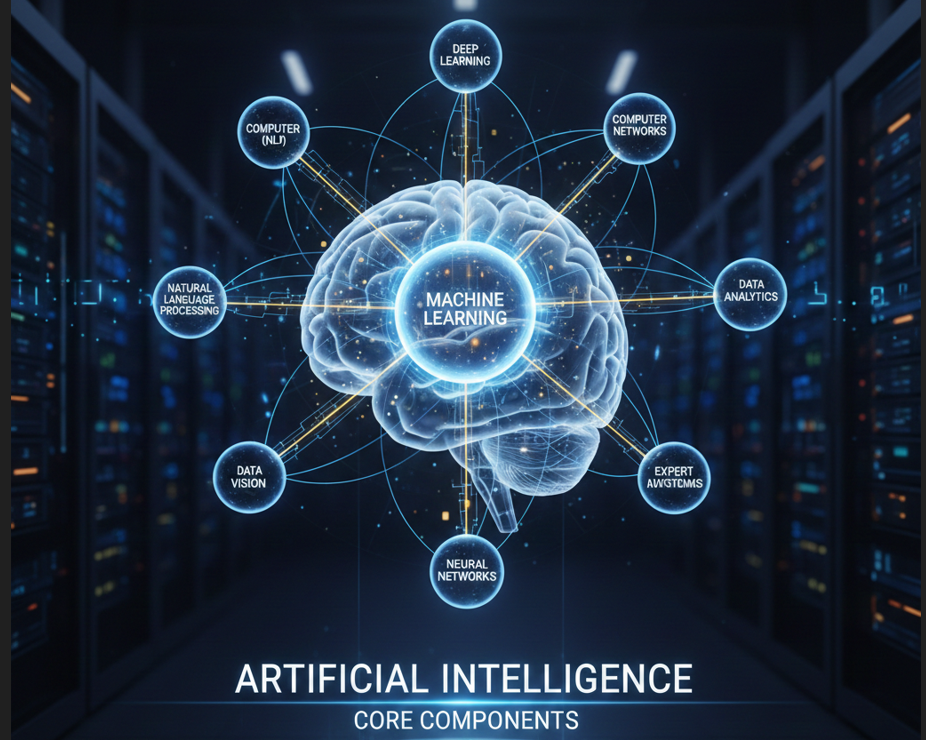
Artificial Intelligence is built upon several foundational components that work together to create intelligent behavior.
Data as the Foundation
Data is the fuel of Artificial Intelligence. AI systems rely on large volumes of structured and unstructured data to learn patterns, make predictions, and generate insights. The quality, diversity, and relevance of data directly influence AI performance.
Algorithms and Models
Algorithms define how AI systems process data and learn from it. Advanced AI uses statistical models, neural networks, and optimization techniques to simulate decision-making processes.
Computational Power
Modern Ai requires immense computing resources. High-performance processors, GPUs, and cloud infrastructure enable AI models to train faster and handle complex tasks efficiently.
Types of Artificial Intelligence
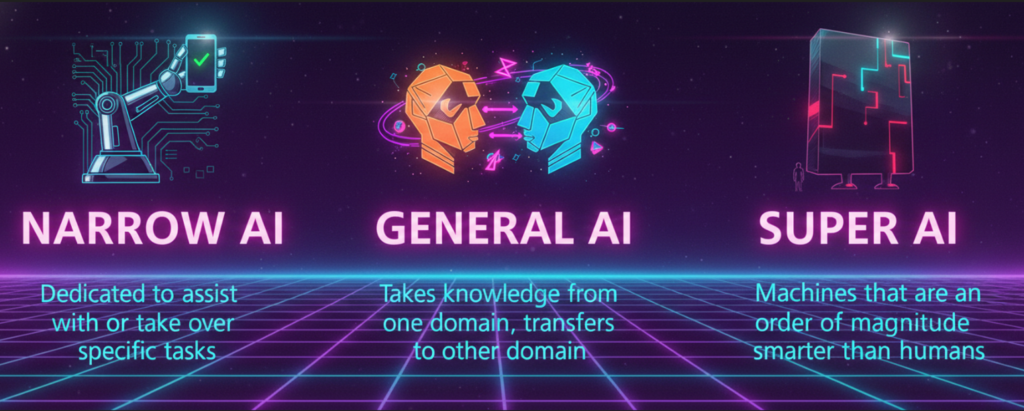
Ai can be classified into three primary categories based on capability and intelligence level.
Narrow Artificial Intelligence
Also known as Weak AI, this type of AI is designed to perform a specific task with high efficiency. Examples include voice assistants, facial recognition systems, recommendation engines, and spam filters. Narrow AI dominates today’s technology landscape.
General Artificial Intelligence
General AI represents systems capable of performing any intellectual task a human can do. This form of AI can reason, learn, and adapt across multiple domains. While still theoretical, General AI remains a central goal of AI research.
Super Artificial Intelligence
Super AI refers to intelligence that surpasses human capabilities in all aspects, including creativity, emotional understanding, and strategic thinking. This concept exists primarily in research discussions and future projections.
Key Technologies Behind Artificial Intelligence
Artificial Intelligence is not a single technology but a combination of advanced methodologies.
Machine Learning
Machine Learning enables AI systems to learn from data without explicit programming. By identifying patterns and relationships, machine learning models continuously improve their predictions and decisions.
Deep Learning
Deep Learning is a subset of machine learning that uses multi-layered neural networks. It powers complex tasks such as speech recognition, image analysis, and natural language understanding.
Natural Language Processing
Natural Language Processing (NLP) allows machines to understand, interpret, and generate human language. NLP is essential for chatbots, search engines, translation tools, and content generation systems.
Computer Vision
Computer Vision enables machines to interpret visual data from images and videos. It is widely used in surveillance, medical imaging, autonomous vehicles, and facial recognition systems.
Real-World Applications of Artificial Intelligence
Artificial Intelligence has moved beyond theory and is actively transforming industries worldwide.
Ai in Healthcare
AI improves diagnostics, predicts disease risks, assists in medical imaging, and supports personalized treatment plans. It enhances accuracy, reduces costs, and accelerates medical research.
Ai in Business and Finance
AI drives fraud detection, algorithmic trading, credit scoring, customer analytics, and process automation. Businesses use AI to optimize operations and improve decision-making.
Ai in Education
AI personalizes learning experiences, automates assessments, and provides intelligent tutoring systems. It helps educators identify learning gaps and improve student outcomes.
Ai in Transportation
Self-driving cars, traffic optimization systems, and predictive maintenance rely heavily on AI. These technologies improve safety, efficiency, and sustainability.
Ai in Digital Marketing
AI enhances audience targeting, content personalization, customer behavior analysis, and campaign optimization. It enables data-driven marketing strategies with measurable results.
Benefits of Artificial Intelligence
Ai offers numerous advantages across sectors:
- Automation of repetitive tasks
- Faster and more accurate decision-making
- Scalability and efficiency
- Enhanced customer experiences
- Data-driven insights
- Cost reduction and productivity gains
By leveraging AI, organizations can focus human talent on creative, strategic, and high-value activities.
Challenges and Limitations of Artificial Intelligence
Despite its advantages, Artificial Intelligence presents significant challenges.
Data Privacy and Security
AI systems process vast amounts of sensitive data, raising concerns about privacy, misuse, and data breaches.
Bias and Fairness
AI models can inherit biases present in training data, leading to unfair or discriminatory outcomes if not properly managed.
Ethical and Legal Issues
The use of AI in surveillance, decision-making, and automation raises ethical questions about accountability, transparency, and control.
Dependence on Technology
Over-reliance on AI systems may reduce human judgment and adaptability if not balanced carefully.
The Future of Artificial Intelligence
The future of Artificial Intelligence is defined by greater integration, increased autonomy, and deeper human-AI collaboration. AI will continue to evolve in areas such as generative models, autonomous systems, healthcare innovation, climate analysis, and scientific discovery.
As AI becomes more advanced, the focus will shift toward responsible AI development, emphasizing transparency, ethics, and human-centric design. Organizations and governments worldwide are working to establish frameworks that ensure AI benefits society as a whole.
Why Artificial Intelligence Matters
It is not just a technological advancement; it is a strategic enabler of progress. It reshapes economies, transforms industries, and influences how societies function. Understanding is essential for businesses, professionals, students, and policymakers navigating a rapidly evolving digital world.
By embracing Ai thoughtfully and responsibly, we unlock opportunities for innovation, efficiency, and sustainable growth.