
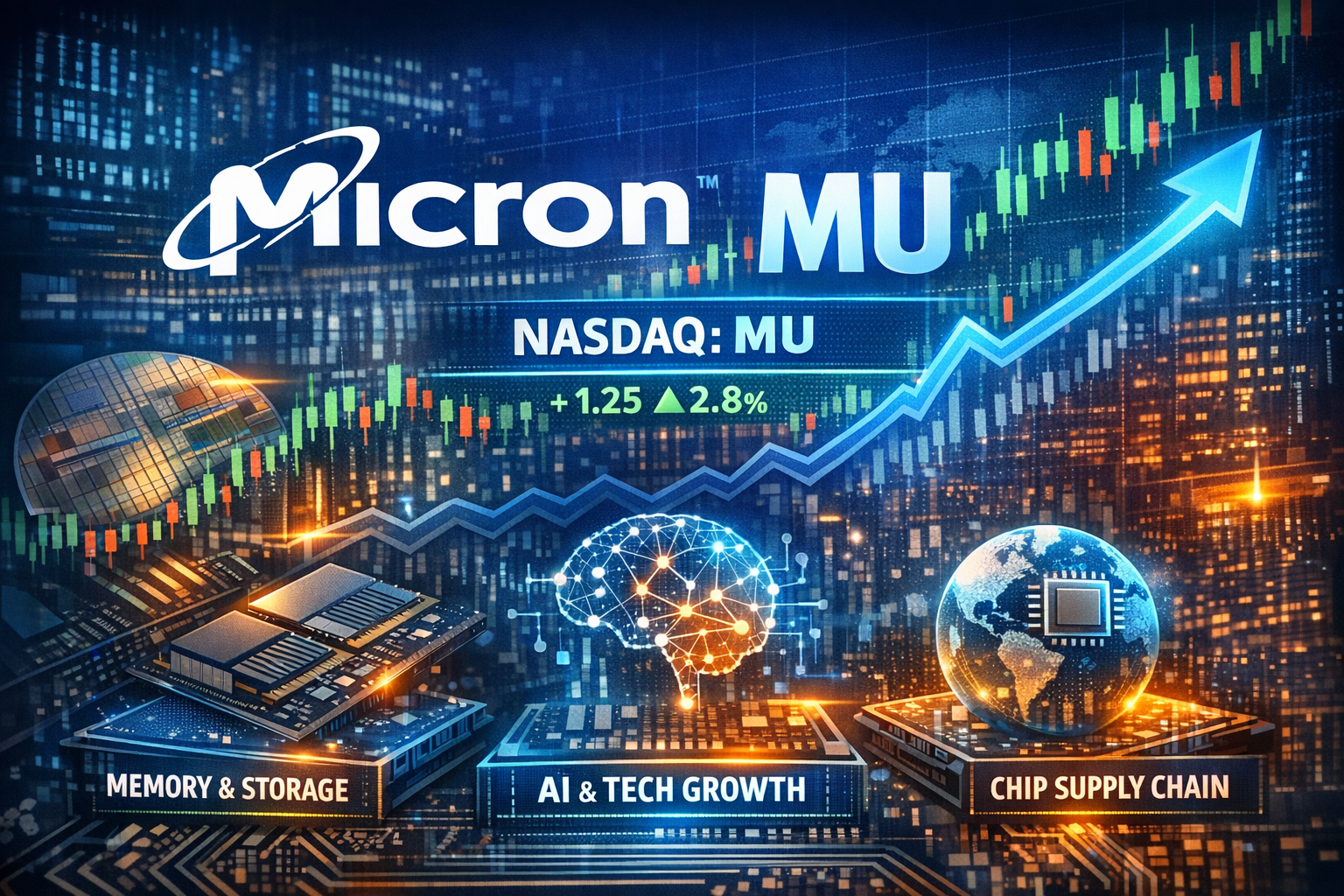
The micron technology stock name refers to the publicly traded shares of Micron Technology, a leading global producer of memory and storage solutions. The company trades on the NASDAQ exchange under the ticker MU, which is the primary identifier investors use when buying or analysing the stock.
For beginners, understanding the micron technology stock name is essential because the ticker symbol connects market data, analyst reports, and trading platforms. Without knowing the correct stock name, investors could easily confuse it with unrelated securities.
Importantly, Micron operates in the semiconductor memory industry, which is known for cycles of high demand followed by temporary slowdowns. As a result, the micron technology stock name often appears in discussions about technology growth, artificial intelligence infrastructure, and global chip supply chains.
Company Background and Global Presence
Micron was founded in 1978 in Boise, Idaho, and has grown into one of the world’s most influential memory chip manufacturers. Over decades, it expanded through research breakthroughs, strategic acquisitions, and global manufacturing facilities.
Today, the company supplies memory solutions used in:
- Smartphones
- Data centres
- Personal computers
- Automotive electronics
- Artificial intelligence systems
Because memory is essential to modern computing, the micron technology stock name is closely tied to worldwide digital transformation. As industries become more data-driven, Micron’s relevance continues to expand.
Furthermore, Micron maintains manufacturing and research sites across the United States, Asia, and Europe. This international footprint strengthens supply resilience while also exposing the firm to geopolitical and regulatory dynamics that investors must consider.
Core Products and Business Segments
Micron’s revenue primarily comes from three categories:
- DRAM (Dynamic Random-Access Memory) – Used in computers, servers, and mobile devices.
- NAND Flash Storage – Found in SSDs, smartphones, and embedded systems.
- Advanced Memory for AI and Data Centres – High-bandwidth memory and next-generation solutions.
These segments explain why the micron technology stock name frequently appears in conversations about artificial intelligence growth. AI workloads require enormous memory capacity, which directly benefits Micron’s product demand.
Additionally, the company invests heavily in research and development to remain competitive. Semiconductor innovation cycles move quickly, and leadership depends on continuous technological progress.
Financial Performance Overview
Micron’s financial results often fluctuate due to semiconductor pricing cycles. Nevertheless, long-term trends show meaningful growth driven by rising data consumption worldwide.
Key financial indicators investors analyse include:
- Revenue growth across memory cycles
- Gross margin expansion during high demand
- Free cash flow generation
- Balance sheet strength
During industry upcycles, the micron technology stock name tends to outperform broader market indices. Conversely, downturns can produce sharp corrections, highlighting the importance of timing and long-term perspective.
Stock Performance in Recent Years
Over the past decade, Micron shares have demonstrated high volatility combined with strong long-term appreciation. This pattern is typical for semiconductor memory companies.
Several factors influence price movement:
- Global chip demand
- AI infrastructure spending
- Supply shortages or oversupply
- Macroeconomic conditions
Because of these variables, the micron technology stock name attracts both growth investors and short-term traders. Long-term holders often benefit from technological megatrends, while traders attempt to profit from cyclical swings.
Key Growth Drivers
Multiple structural trends support future growth:
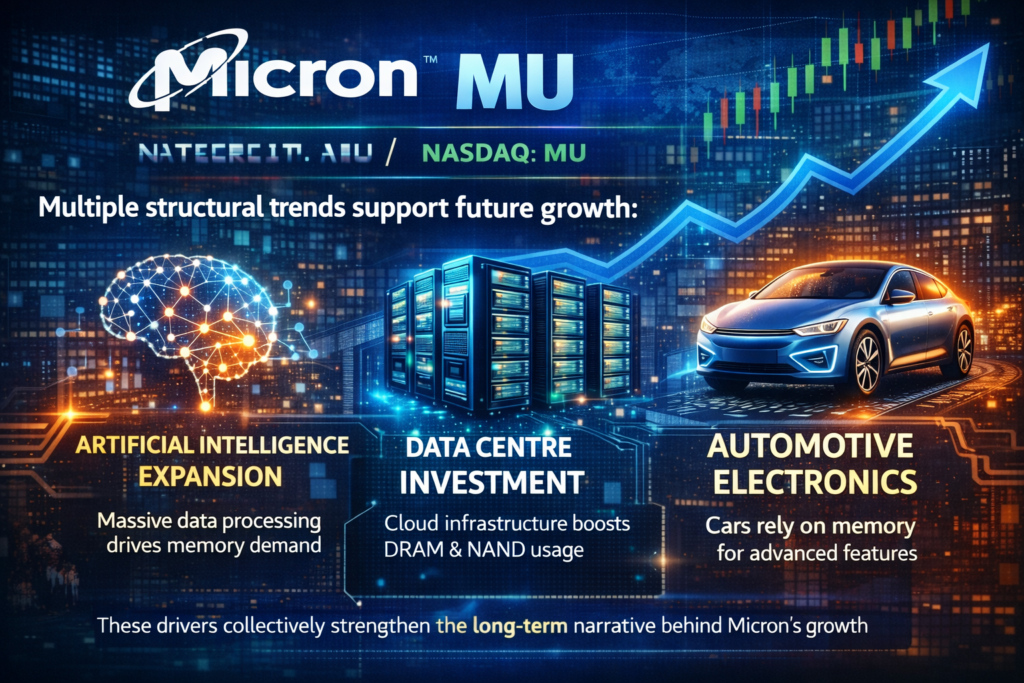
Artificial Intelligence Expansion
AI requires massive data processing and storage. Memory demand rises accordingly, directly supporting Micron’s revenue outlook.
Data Centre Investment
Cloud providers continue building large-scale infrastructure, increasing DRAM and NAND consumption.
Automotive Electronics
Electric and autonomous vehicles depend heavily on memory chips, opening a new long-term revenue stream.
These drivers collectively strengthen the long-term narrative behind the micron technology stock name.
Risks Investors Should Consider
Despite strong opportunities, risks remain:
- Semiconductor cyclicality
- Intense global competition
- Capital-intensive manufacturing
- Trade restrictions and geopolitics
Understanding these challenges helps investors evaluate whether the micron technology stock name fits their risk tolerance.
Dividend Policy and Shareholder Returns
Micron introduced a dividend in recent years, signalling confidence in long-term cash generation. While the yield is modest, the move reflects financial maturity.
Share buybacks also play a role in returning value. Reducing outstanding shares can improve earnings per share over time.
Comparison with Industry Peers
Micron competes with major global semiconductor firms. Compared with peers, it offers:
- Strong exposure to AI memory demand
- Competitive manufacturing technology
- Cyclical but potentially high upside
This positioning keeps the micron technology stock name relevant in growth-focused portfolios.
Analyst Forecasts and Market Sentiment
Market analysts frequently update projections based on:
- Memory pricing trends
- AI demand forecasts
- Earnings guidance
You can review current analyst opinions through reputable financial platforms such as
https://www.nasdaq.com/ (external reference for market data).
Positive sentiment often drives rallies, while cautious outlooks may trigger pullbacks.
Long-Term Investment Potential
From a strategic viewpoint, Micron benefits from irreversible digital trends:
- Rising global data creation
- AI integration across industries
- Cloud computing expansion
Because memory is foundational to all computing, the micron technology stock name holds compelling long-term relevance despite short-term volatility.
How to Buy Micron Shares
Investors can purchase shares through:
- Online brokerage accounts
- Retirement investment platforms
- International trading services
Before investing, consider diversification, time horizon, and financial goals.
Tax and Regulatory Considerations
International investors should review:
- Capital gains tax rules
- Currency exchange impact
- Local brokerage regulations
Professional financial advice may be helpful before purchasing foreign equities.
Future Trends in Memory Technology
Emerging innovations include:
- High-bandwidth memory for AI
- Advanced lithography processes
- Energy-efficient storage architectures
These technologies could significantly influence the micron technology stock name in the coming decade.
Final Investment Perspective
In summary, Micron represents a cyclical yet high-potential semiconductor investment. While volatility is unavoidable, long-term digital transformation supports sustained relevance.
Investors who understand timing, diversification, and industry cycles may find meaningful opportunity in this stock.
Frequently Asked Questions (FAQs)
1. What is the ticker symbol for Micron?
The ticker symbol is MU, representing the micron technology stock name on NASDAQ.
2. Is Micron a good long-term investment?
It can be, particularly for investors seeking exposure to AI, data centres, and semiconductor growth.
3. Does Micron pay dividends?
Yes, though the yield is relatively modest compared with income-focused stocks.
4. Why is the stock volatile?
Semiconductor memory pricing cycles cause fluctuations in revenue and investor sentiment.
5. Who are Micron’s main competitors?
Major global semiconductor manufacturers compete in DRAM and NAND markets.
6. How can beginners invest safely?
Diversification, long-term perspective, and research are essential before buying any stock.
Conclusion
Understanding the micron technology stock name helps investors navigate one of the most dynamic areas of the global technology market. With strong exposure to AI, cloud computing, and digital infrastructure, Micron remains a company worth careful attention in the years ahead.