
Is AI integration expensive? That’s one of the most common questions businesses ask when considering adopting artificial intelligence. And honestly, the answer isn’t as simple as “yes” or “no.” It depends on several factors like business size, goals, and the type of AI being used.
Artificial Intelligence (AI) has rapidly become a game-changer across industries. From automating customer support to predicting market trends, AI is everywhere. However, many organizations hesitate to adopt it due to cost concerns. Some think it’s only for big corporations with massive budgets—but that’s not entirely true.
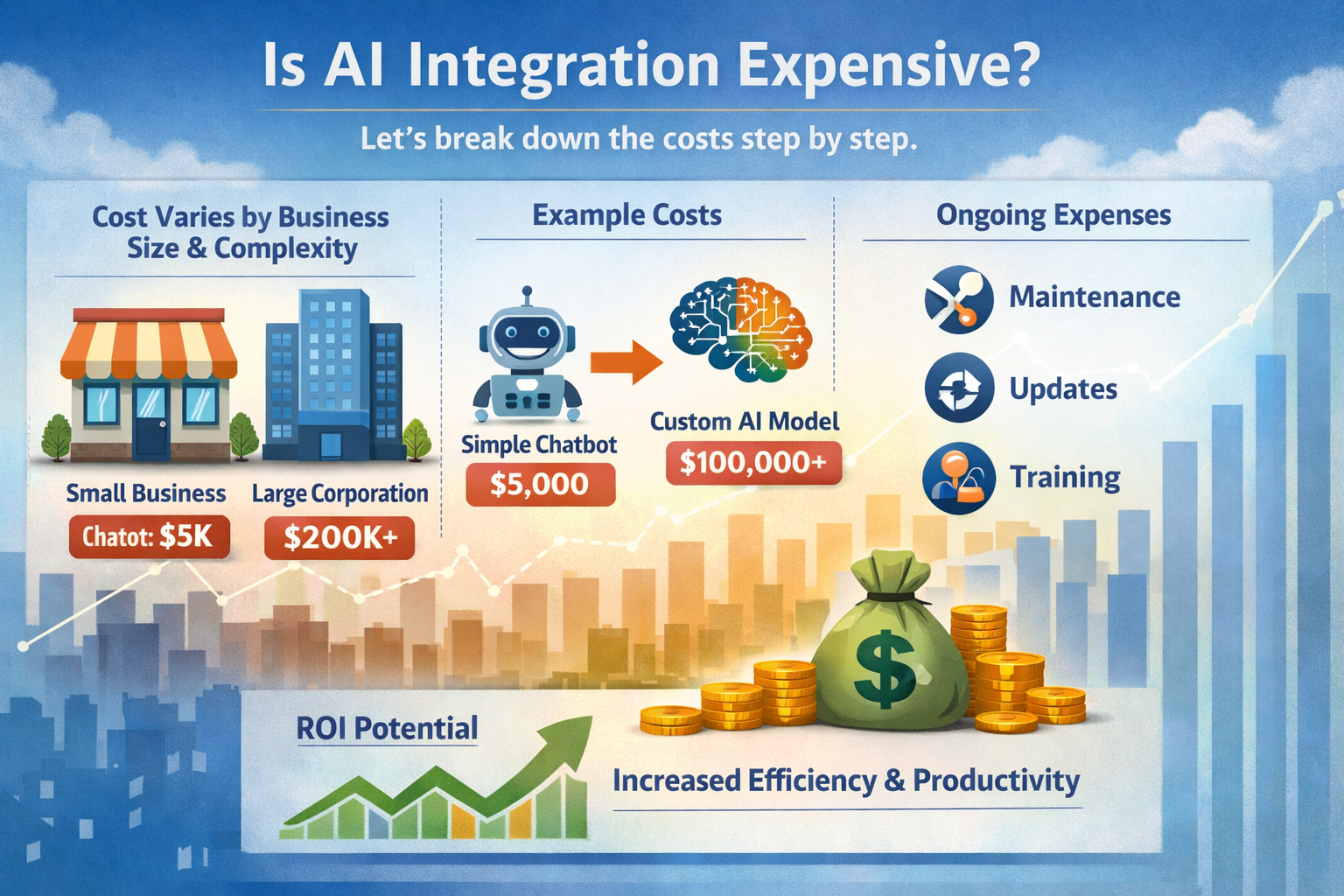
In reality, AI integration can range from affordable to highly expensive, depending on the complexity of the solution. For example, integrating a simple chatbot may cost a few thousand dollars, while building a custom AI model could cost hundreds of thousands.
Moreover, businesses must also consider long-term investments like maintenance, updates, and employee training. Still, when done right, AI often pays for itself through increased efficiency and productivity.
So, is AI integration expensive? Let’s break it down step by step and uncover the real story behind the costs.
What Does AI Integration Really Mean?
Before diving deeper into costs, it’s important to understand what AI integration actually involves. In simple terms, AI integration means adding artificial intelligence capabilities into your existing systems, processes, or products.
Types of AI Integration
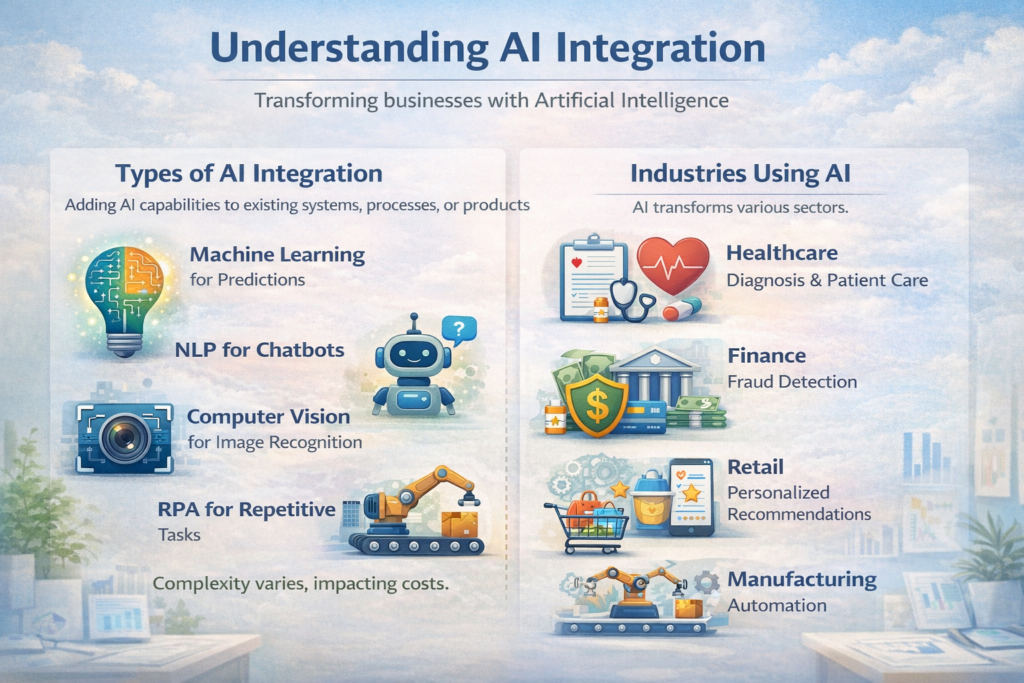
AI isn’t a one-size-fits-all solution. It comes in various forms, including:
- Machine Learning models for predictions
- Natural Language Processing (NLP) for chatbots
- Computer Vision for image recognition
- Robotic Process Automation (RPA) for repetitive tasks
Each type has different cost implications. For instance, a chatbot is much cheaper compared to a full-scale predictive analytics system.
Industries Using AI
AI is widely used across industries such as:
- Healthcare for diagnosis and patient care
- Finance for fraud detection
- Retail for personalized recommendations
- Manufacturing for automation
These applications vary significantly in complexity, which directly impacts cost.
In short, AI integration is not just about technology—it’s about transforming how businesses operate.
Key Factors That Affect AI Integration Cost
When asking “is AI integration expensive,” you need to consider the factors that influence pricing.
Data Requirements
AI thrives on data. The more data you need to train your models, the higher the cost. Data collection, cleaning, and labeling can be time-consuming and expensive.
Infrastructure Costs
AI systems require strong computing power. Businesses often invest in:
- Cloud services
- GPUs and servers
- Storage systems
Cloud platforms like AWS or Google Cloud can reduce upfront costs but still require ongoing payments.
Talent and Expertise
Hiring AI experts is one of the biggest expenses. Skilled professionals like:
- Data scientists
- AI engineers
- Machine learning specialists
command high salaries.
Additionally, businesses may need consultants or external vendors, which adds to the cost.
Is AI Integration Expensive for Small Businesses?
For small businesses, the question “is AI integration expensive” is even more critical.
Budget-Friendly AI Options
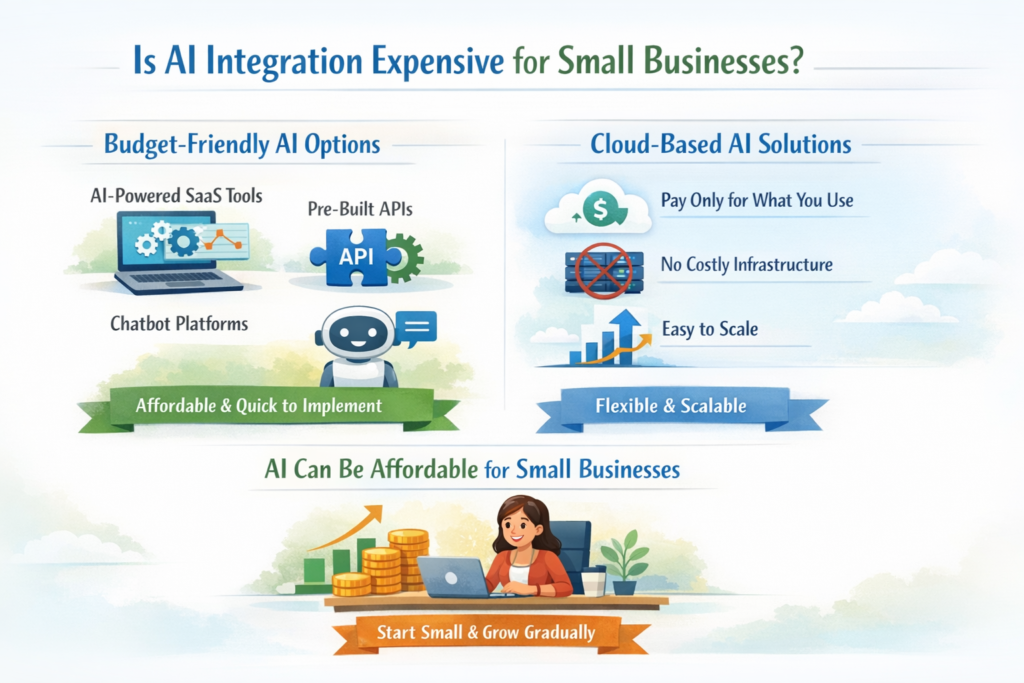
Fortunately, there are affordable options available:
- AI-powered SaaS tools
- Pre-built APIs
- Chatbot platforms
These solutions require minimal investment and can deliver quick results.
Cloud-Based AI Solutions
Cloud-based AI services are a game-changer. They allow businesses to:
- Pay only for what they use
- Avoid heavy infrastructure costs
- Scale easily
This makes AI accessible even for startups.
So, while AI integration can be expensive, it doesn’t have to be. Small businesses can start small and grow gradually.
Comparing AI Integration Costs Across Industries
Different industries have different cost structures when it comes to AI.
Healthcare
AI in healthcare is often expensive due to:
- Strict regulations
- High data sensitivity
- Complex algorithms
Finance
Financial institutions invest heavily in AI for:
- Fraud detection
- Risk analysis
- Customer insights
Costs can be high, but the returns are also significant.
E-commerce
E-commerce businesses use AI for:
- Product recommendations
- Chatbots
- Inventory management
These solutions are relatively affordable and offer quick ROI.
Hidden Costs of AI Integration
When evaluating whether AI integration is expensive, many businesses overlook hidden costs.
Maintenance and Updates
AI systems require continuous updates to remain effective. This includes:
- Model retraining
- Software updates
- Performance monitoring
Training Employees
Employees need training to work with AI tools. This adds:
- Training costs
- Productivity loss during learning
Ignoring these factors can lead to underestimating the total cost.
Benefits That Justify AI Costs
Despite the costs, AI offers significant benefits.
Efficiency Gains
AI can automate repetitive tasks, saving time and reducing errors.
ROI and Long-Term Savings
Over time, AI can:
- Reduce operational costs
- Improve decision-making
- Increase revenue
According to a report by
https://www.mckinsey.com
many companies see a strong return on AI investments within a few years.
So, even if AI integration seems expensive initially, the long-term benefits often outweigh the costs.
Cost Breakdown of AI Integration
Let’s take a closer look at where the money goes.
Development Costs
- Custom AI model creation
- Data preparation
- Testing and validation
Deployment Costs
- Integration with existing systems
- Infrastructure setup
Maintenance Costs
- Updates and monitoring
- Technical support
| Cost Component | Estimated Cost |
|---|---|
| Basic AI Tool | $5,000 – $20,000 |
| Mid-Level Solution | $20,000 – $100,000 |
| Advanced AI System | $100,000+ |
How to Reduce AI Integration Costs
If you’re worried about whether AI integration is expensive, here are some ways to cut costs.
Open-Source Tools
Using open-source frameworks like TensorFlow or PyTorch can significantly reduce expenses.
Outsourcing Development
Hiring external experts or agencies can be more cost-effective than building an in-house team.
Additionally, starting with a pilot project can help minimize risks.
Real-World Examples of AI Costing
Businesses around the world have adopted AI with varying budgets.
- A small e-commerce store implemented a chatbot for under $10,000
- A large bank invested millions in AI for fraud detection
- A startup used AI APIs to automate customer support at low cost
These examples show that AI integration can fit different budgets.
Future Trends in AI Pricing
AI is becoming more affordable over time. Trends include:
- Increased availability of AI-as-a-Service
- Improved open-source tools
- Automation of AI development
As technology evolves, costs are expected to decrease, making AI accessible to more businesses.
FAQs
1. Is AI integration expensive for startups?
Not necessarily. Startups can use affordable AI tools and cloud services to keep costs low.
2. What is the average cost of AI integration?
It ranges from $5,000 to over $100,000 depending on complexity.
3. Can small businesses afford AI?
Yes, with SaaS and cloud-based solutions, AI is more accessible than ever.
4. What are the biggest costs in AI integration?
Data preparation, infrastructure, and skilled talent are the major expenses.
5. How long does it take to recover AI investment?
Most businesses see ROI within 1–3 years.
6. Is AI worth the investment?
Absolutely. AI improves efficiency, reduces costs, and boosts revenue in the long run.
Conclusion
So, is AI integration expensive? The honest answer is—it depends. While AI can require a significant upfront investment, it doesn’t always have to be expensive. With the right strategy, tools, and approach, businesses of all sizes can leverage AI without breaking the bank.
The key is to start small, focus on high-impact areas, and scale gradually. Over time, the benefits of AI—efficiency, automation, and smarter decision-making—far outweigh the costs.
In today’s competitive world, AI isn’t just an option anymore—it’s becoming a necessity.