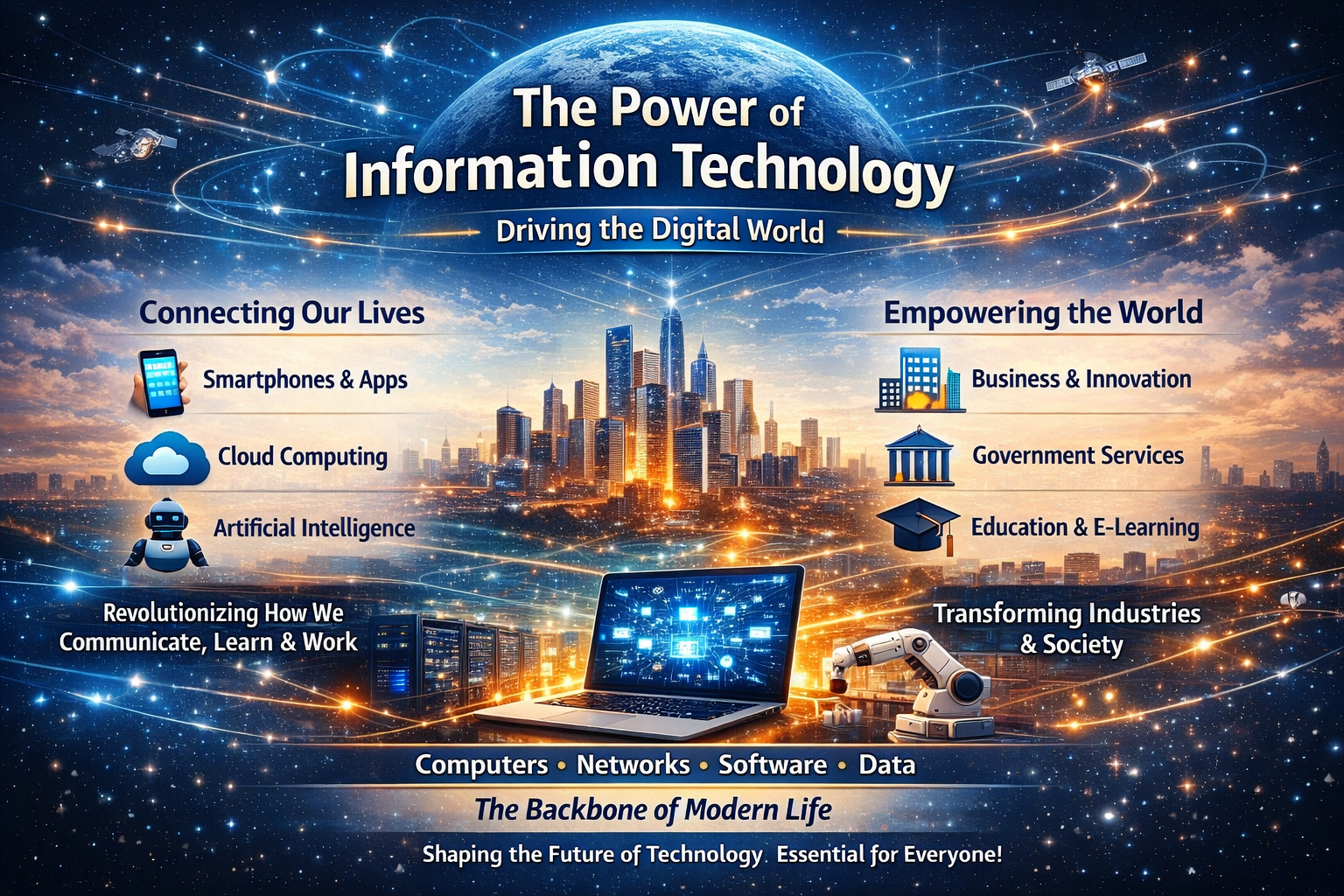
Information Technology has become the backbone of the modern world. From smartphones and cloud storage to artificial intelligence and automation, nearly every part of daily life depends on digital systems. Businesses rely on IT to manage operations, governments use it for public services, and students depend on it for education.
In simple words, Information Technology refers to the use of computers, software, networks, and digital systems to store, process, and share information. Over the past few decades, IT has grown rapidly, changing how people communicate, learn, and work.
Today, Information Technology isn’t just a technical field—it’s a driving force behind global innovation and economic growth. As technology keeps evolving, understanding IT becomes essential for everyone, not just professionals.
What Is Information Technology?
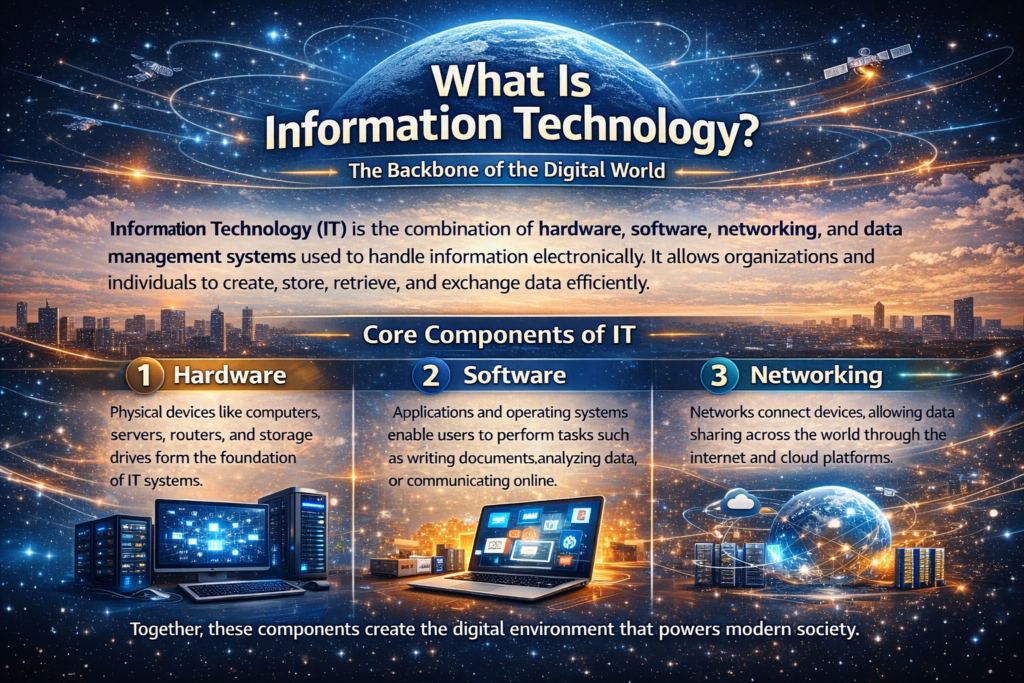
Information Technology (IT) is the combination of hardware, software, networking, and data management systems used to handle information electronically. It allows organizations and individuals to create, store, retrieve, and exchange data efficiently.
Core Components of IT
1. Hardware
Physical devices like computers, servers, routers, and storage drives form the foundation of IT systems.
2. Software
Applications and operating systems enable users to perform tasks such as writing documents, analyzing data, or communicating online.
3. Networking
Networks connect devices, allowing data sharing across the world through the internet and cloud platforms.
Together, these components create the digital environment that powers modern society.
History and Evolution of Information Technology
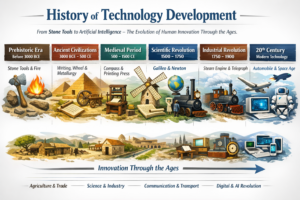
Early Computing Era
The journey of Information Technology began with large mechanical computers in the mid-20th century. These machines were slow, expensive, and limited in function. However, they introduced the concept of automated data processing.
Internet Revolution
The invention of the internet completely transformed IT. Email, websites, and online communication made global connectivity possible. Later, smartphones, social media, and cloud computing accelerated digital transformation even further.
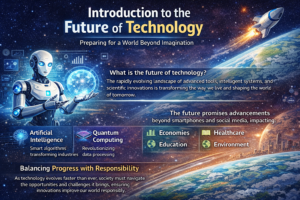
Today, Information Technology continues to evolve with artificial intelligence, big data, and automation leading the next wave of innovation.
Importance of Information Technology in Modern Life
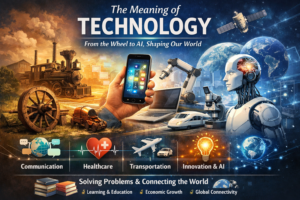
Communication
IT enables instant communication through messaging apps, video calls, and social media. Distance is no longer a barrier, making global collaboration easy.
Business and Economy
Companies use Information Technology for accounting, marketing, customer service, and supply chain management. E-commerce platforms allow businesses to reach customers worldwide.
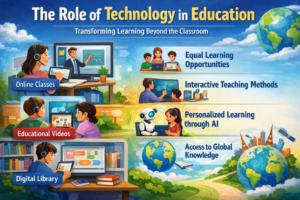
Education and Learning
Online classes, digital libraries, and educational apps have made learning accessible to millions. Students can now study anytime, anywhere.
Clearly, Information Technology plays a vital role in shaping modern society.
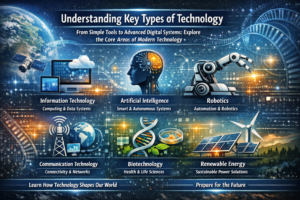
Types of Information Technology
Hardware Technology
This includes computers, servers, storage devices, and networking equipment. Hardware forms the physical infrastructure of IT systems.
Software Technology
Software includes operating systems, mobile apps, and enterprise programs. Without software, hardware cannot perform meaningful tasks.
Networking and Cloud Computing
Cloud computing allows data storage and processing over the internet instead of local machines. Learn more about cloud technology from this helpful resource:
https://www.ibm.com/cloud/learn/what-is-cloud-computing
Networking connects devices globally, enabling real-time communication and collaboration.
Key Applications of Information Technology
Healthcare
Hospitals use IT for electronic medical records, diagnostic imaging, and telemedicine. This improves patient care and saves time.
Banking and Finance
Online banking, digital payments, and fraud detection systems rely heavily on Information Technology.
Entertainment and Media
Streaming platforms, gaming, and digital content creation are all powered by IT infrastructure.
These applications show how deeply IT is integrated into everyday life.
Advantages of Information Technology
Information Technology offers numerous benefits:
- Faster communication
- Efficient data storage
- Automation of tasks
- Global connectivity
- Improved decision-making through data analysis
Because of these advantages, organizations continue investing heavily in IT solutions.
Challenges and Risks in Information Technology
Despite its benefits, Information Technology also presents challenges:
- Cybersecurity threats
- Data privacy concerns
- Technology dependence
- High implementation costs
Managing these risks is essential for safe and responsible IT usage.
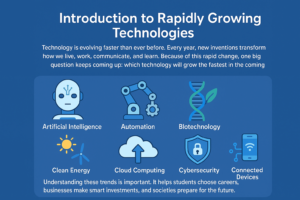
Future Trends in Information Technology
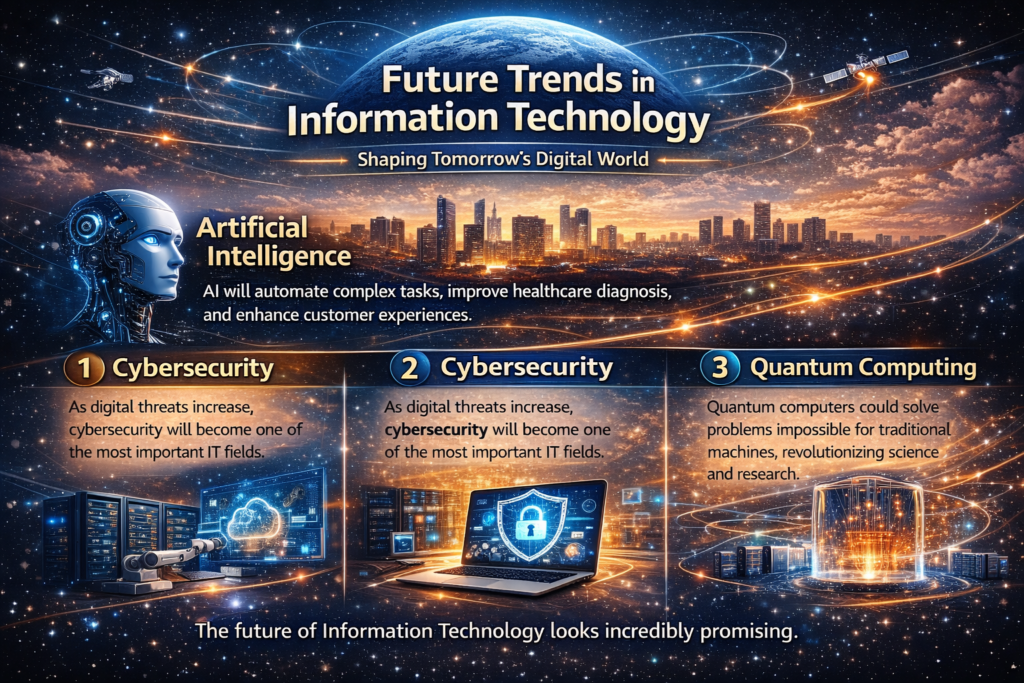
Artificial Intelligence
AI will automate complex tasks, improve healthcare diagnosis, and enhance customer experiences.
Cybersecurity
As digital threats increase, cybersecurity will become one of the most important IT fields.
Quantum Computing
Quantum computers could solve problems impossible for traditional machines, revolutionizing science and research.
The future of Information Technology looks incredibly promising.
Career Opportunities in Information Technology
IT offers diverse career paths, including:
- Software developer
- Data analyst
- Cybersecurity specialist
- Cloud engineer
- IT support professional
With digital transformation accelerating, demand for IT professionals continues to grow worldwide.
FAQs About Information Technology
1. What is Information Technology in simple words?
It is the use of computers and digital systems to store, process, and share information.
2. Why is Information Technology important?
Because it supports communication, business operations, education, and innovation.
3. What are the main components of IT?
Hardware, software, and networking systems.
4. Is Information Technology a good career?
Yes, it offers high demand, good salaries, and global opportunities.
5. What skills are needed for IT jobs?
Programming, problem-solving, communication, and technical knowledge.
6. What is the future of Information Technology?
AI, cybersecurity, and quantum computing will shape the next generation of IT.
Conclusion
Information Technology has transformed the world in ways once unimaginable. From communication and healthcare to education and business, IT powers nearly every modern system. While challenges like cybersecurity and privacy remain, the opportunities created by Information Technology are far greater.
As innovation continues, learning and adapting to Information Technology will be essential for individuals, businesses, and societies. The future belongs to those who understand and use technology wisely.