
The future of jobs in the AI world is rapidly unfolding before us, reshaping industries, redefining skills, and transforming how we work at a fundamental level. Artificial Intelligence is no longer a distant concept confined to research labs; it is a powerful force actively influencing employment patterns across the globe. We are witnessing a structural shift in the labor market where automation, machine learning, and intelligent systems are becoming deeply integrated into everyday business operations, defining the future of jobs in the AI world.
This transformation is not about the elimination of work but about the evolution of work. Jobs are being redesigned, new roles are emerging, and the value of human creativity, judgment, and emotional intelligence is increasing. Understanding these changes is essential for individuals, organizations, and economies aiming to remain competitive in the future of jobs in the AI world.
How Artificial Intelligence Is Transforming Job Roles
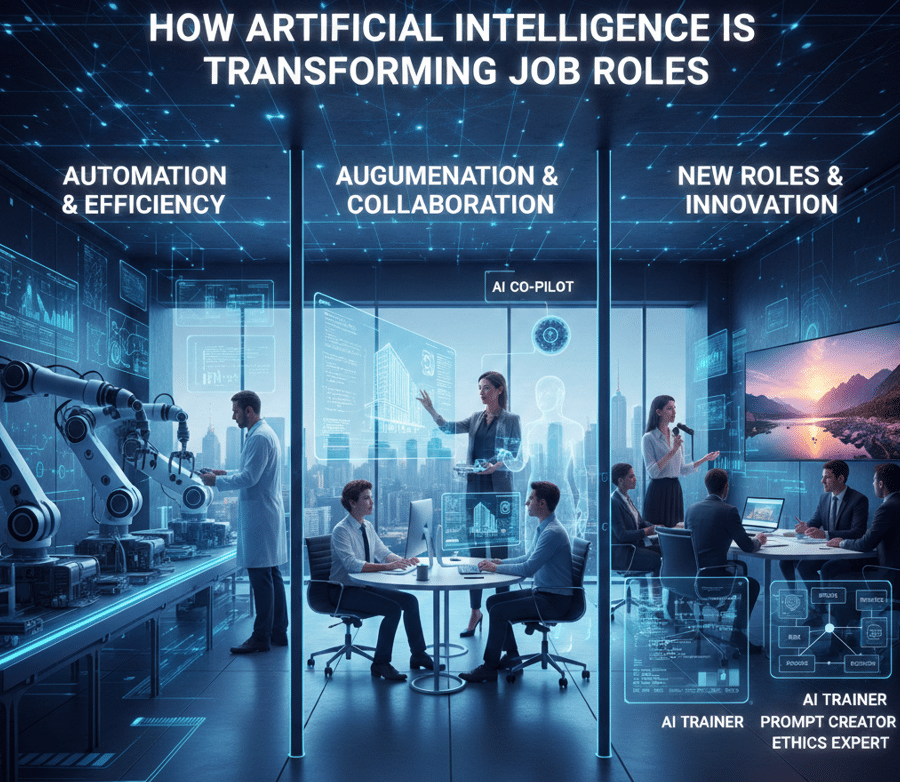
Artificial Intelligence is fundamentally changing how tasks are performed, not just who performs them. Routine, repetitive, and rule-based tasks are increasingly automated, allowing humans to focus on higher-value responsibilities that shape the future of jobs in the AI world.
In sectors such as finance, healthcare, manufacturing, and logistics, AI systems now handle data analysis, predictive modeling, quality control, and operational optimization. This shift improves efficiency while reducing human error. As a result, traditional job descriptions are evolving into hybrid roles that combine domain expertise with AI literacy—an essential trend in the future of jobs in the AI world.
We are seeing a growing demand for professionals who can collaborate with intelligent systems, interpret AI-generated insights, and make strategic decisions based on data-driven recommendations, reinforcing the future of jobs in the AI world.
Emerging Job Opportunities in the AI Era
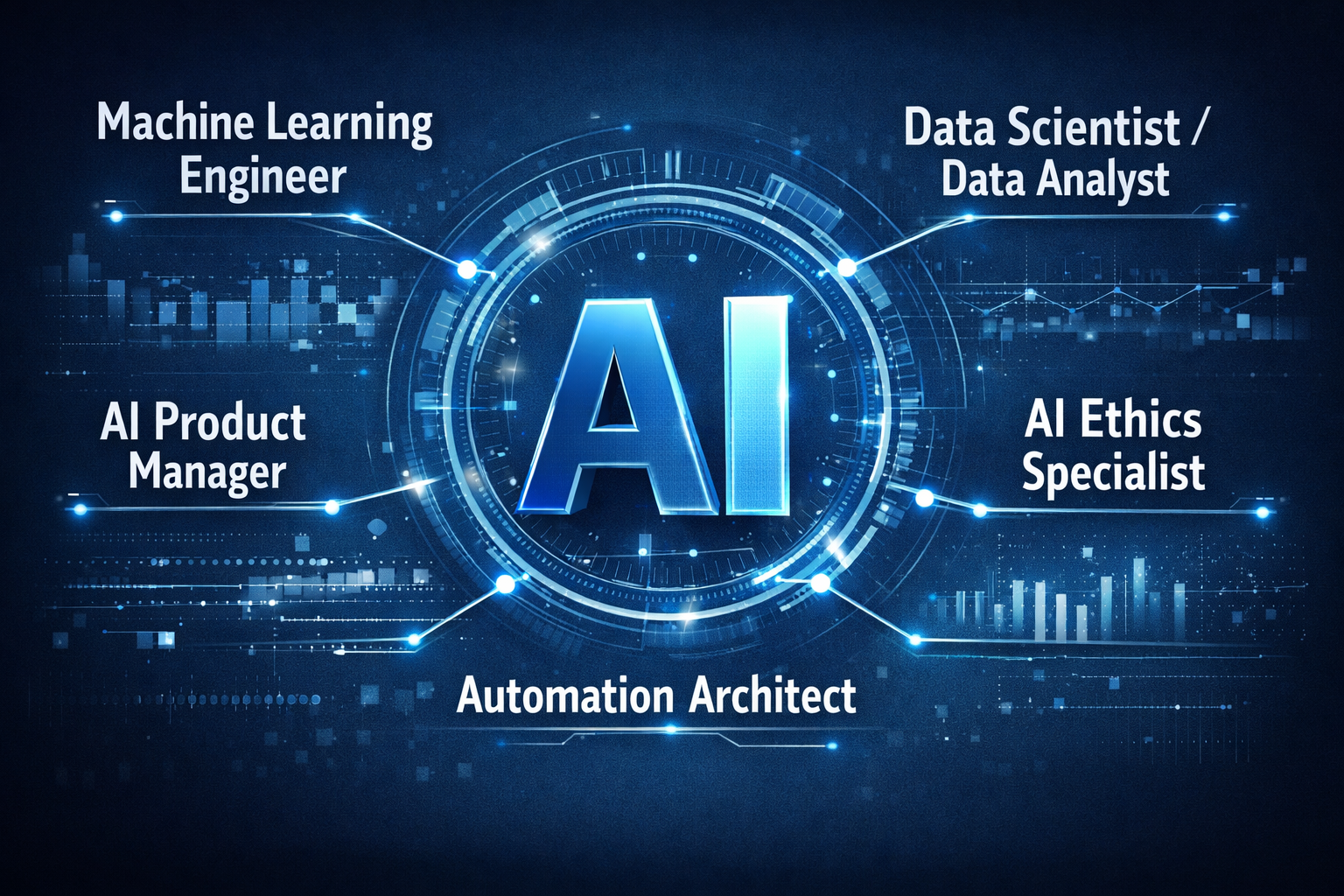
The AI job market is expanding rapidly, creating roles that did not exist a decade ago. These opportunities span technical, creative, and strategic domains, clearly reflecting the future of jobs in the AI world.
Some of the fastest-growing AI-related roles include:
Machine Learning Engineers responsible for building and optimizing intelligent models
Data Scientists and Analysts who transform raw data into actionable insights
AI Product Managers who align technology development with business goals
AI Ethics Specialists ensuring responsible and transparent use of AI
Automation Architects designing intelligent workflows across enterprises
Beyond purely technical positions, AI is also creating demand in marketing, content strategy, cybersecurity, education, and human resources. The ability to understand and leverage AI tools is becoming a core competency across industries shaping the future of jobs in the AI world.
Jobs at Risk and the Reality of Automation
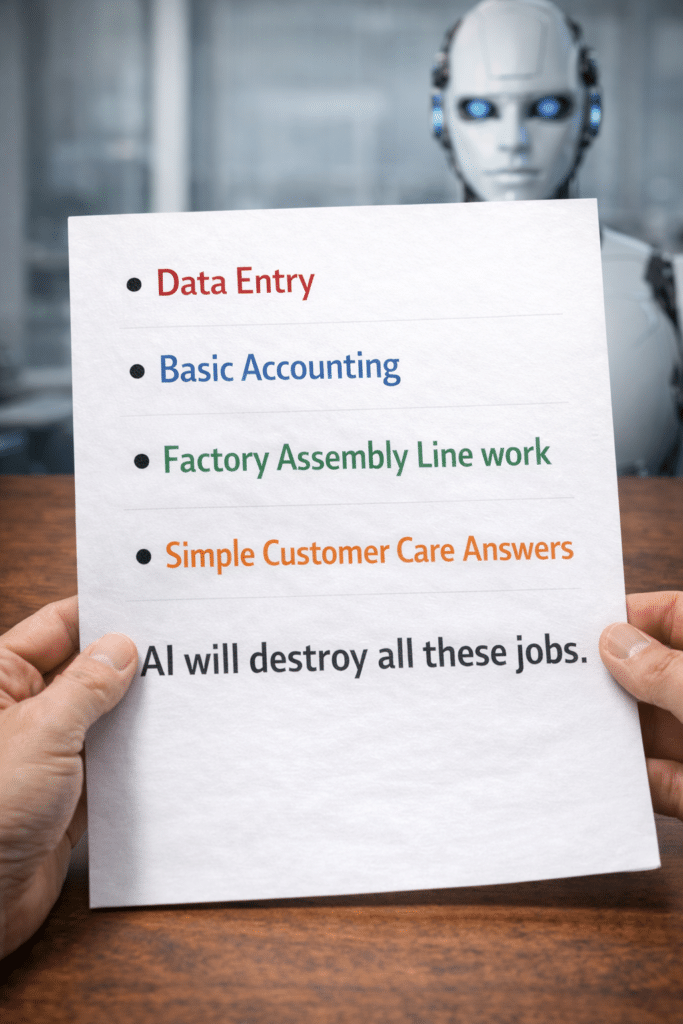
While AI creates opportunities, it also disrupts certain job categories. Roles heavily dependent on repetitive manual or cognitive tasks are more susceptible to automation. This includes data entry, basic accounting, assembly-line work, and simple customer service interactions in the future of jobs in the AI world.
However, job displacement does not equate to mass unemployment. Historically, technological revolutions have always replaced some jobs while creating others. The key difference in the AI era is the speed of change, making adaptability and continuous learning critical for workforce resilience in the future of jobs in the AI world.
We are moving from job security based on a single skill set to career security based on adaptability.
The Rise of Human-Centric Skills
As machines become better at computation and pattern recognition, human skills gain greater importance. Employers increasingly value abilities that AI cannot easily replicate in the future of jobs in the AI world.
These include:
Critical thinking and complex problem-solving
Creativity and innovation
Emotional intelligence and empathy
Leadership and strategic vision
Communication and collaboration
The future workforce will prioritize individuals who can combine technical understanding with human insight. AI enhances human capabilities rather than replacing them, making collaboration between humans and machines the dominant work model in the future of jobs in the AI world.
Reskilling and Upskilling for the AI Economy
The future of jobs in the AI world depends heavily on reskilling and upskilling initiatives. Lifelong learning is becoming a necessity rather than an option.
Educational institutions, governments, and organizations are investing in:
Digital literacy and AI fundamentals
Advanced data analytics and cloud computing
Coding, automation, and system design
Soft skills aligned with leadership and adaptability
Online learning platforms, micro-credentials, and corporate training programs are enabling professionals to transition into AI-relevant roles without traditional career barriers. Those who embrace continuous learning will thrive in the future of jobs in the AI world.
AI and the Future of Remote and Hybrid Work
AI is accelerating the adoption of remote and hybrid work models. Intelligent collaboration tools, virtual assistants, workflow automation, and predictive scheduling systems are making distributed teams more productive than ever, shaping the future of jobs in the AI world.
Organizations are leveraging AI to:
Optimize workforce planning
Enhance employee engagement
Improve performance evaluation through data-driven insights
Personalize learning and development paths
This shift is redefining workplace culture, emphasizing outcomes over physical presence and enabling access to global talent pools aligned with the future of jobs in the AI world.
Ethical Considerations and Responsible AI Employment
As AI becomes deeply embedded in hiring, performance evaluation, and decision-making, ethical considerations play a critical role in shaping the future of jobs in the AI world.
Responsible AI adoption focuses on:
Transparency in algorithmic decision-making
Fairness and bias mitigation in recruitment tools
Data privacy and workforce surveillance boundaries
Human oversight in high-stakes decisions
Organizations that prioritize ethical AI practices build trust, ensure compliance, and create sustainable work environments aligned with societal values and the future of jobs in the AI world.
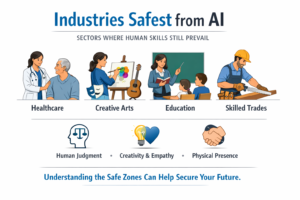
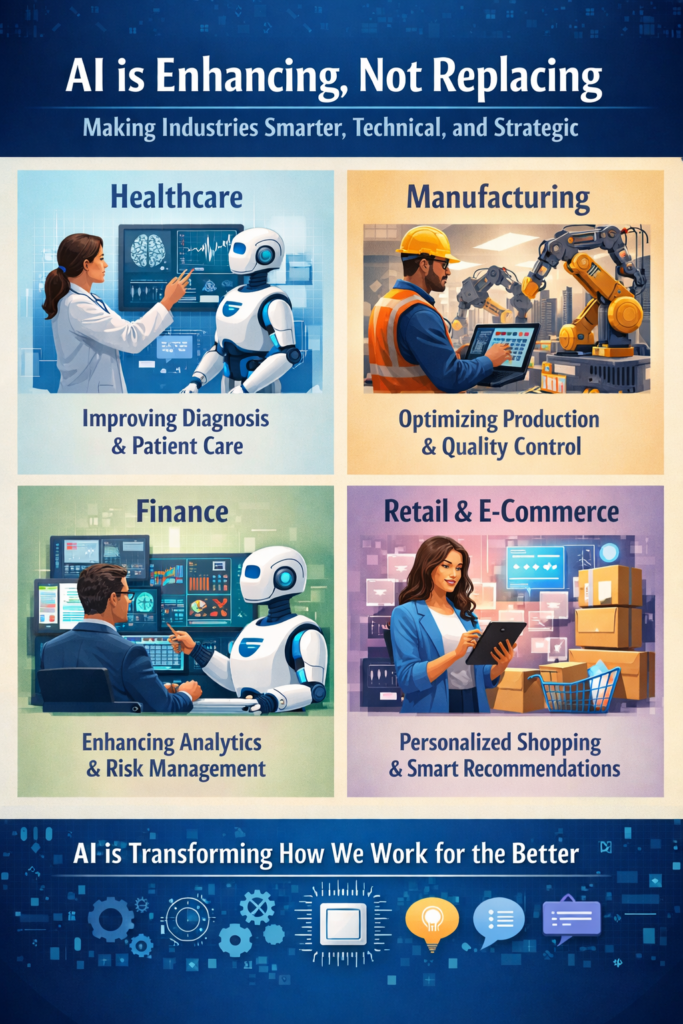
Industry-Wise Impact of AI on Employment
Different industries experience AI disruption in unique ways, influencing the future of jobs in the AI world:
Healthcare benefits from AI-assisted diagnostics, personalized treatment planning, and operational efficiency
Manufacturing adopts smart factories with predictive maintenance and robotics
Finance leverages AI for fraud detection, risk assessment, and algorithmic trading
Retail and E-commerce utilize AI for demand forecasting, personalization, and inventory management
Education integrates adaptive learning systems and AI-driven assessment tools
Each sector sees a shift toward more strategic, analytical, and technology-enabled roles in the future of jobs in the AI world.
The Long-Term Vision of Work in an AI World
Looking ahead, the future of jobs in the AI world is defined by collaboration, flexibility, and innovation. Work will become more project-based, skills-driven, and outcome-oriented.
We anticipate:
Greater emphasis on interdisciplinary roles
Increased use of AI as a decision-support partner
Continuous reinvention of careers across life stages
Stronger alignment between technology and human purpose
Economic growth in the AI era will favor societies that invest in education, inclusivity, and ethical innovation related to the future of jobs in the AI world.
Conclusion: Preparing for an AI-Powered Job Market
The future of jobs in the AI world is not a threat but an opportunity for transformation. AI is reshaping how value is created, how work is performed, and how careers are built. By embracing change, investing in skills, and fostering human-AI collaboration, we can unlock unprecedented levels of productivity and fulfillment in the future of jobs in the AI world.
Success in this new era belongs to those who are proactive, adaptable, and forward-thinking. The AI revolution in employment is not about replacing humans—it is about redefining human potential.