
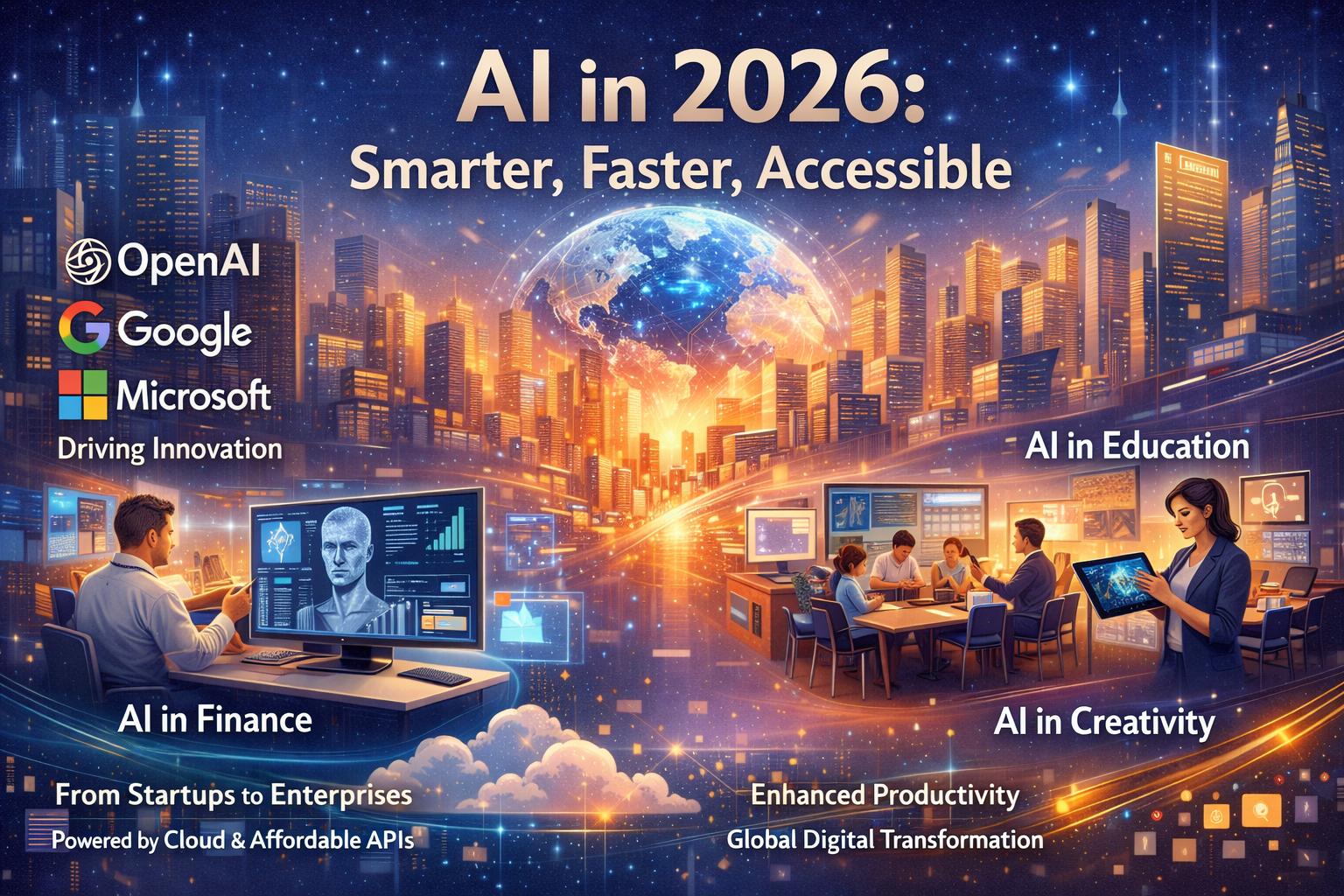
Artificial intelligence has shifted from experimental technology to everyday necessity. In 2026, organisations of every size rely on automation, predictive analytics, and intelligent assistants to remain competitive. The best artificial intelligence software 2026 solutions aren’t just smarter—they’re faster, safer, and more accessible than ever before.
Rapid innovation from companies like OpenAI, Google, and Microsoft has accelerated adoption across healthcare, finance, education, and creative industries. Consequently, AI is no longer optional; it’s foundational.
Moreover, cloud computing and affordable APIs have democratised access. Small startups can now deploy tools once reserved for global enterprises. As a result, productivity gains are measurable, and digital transformation is accelerating worldwide.
What Makes AI Software “Best” in 2026
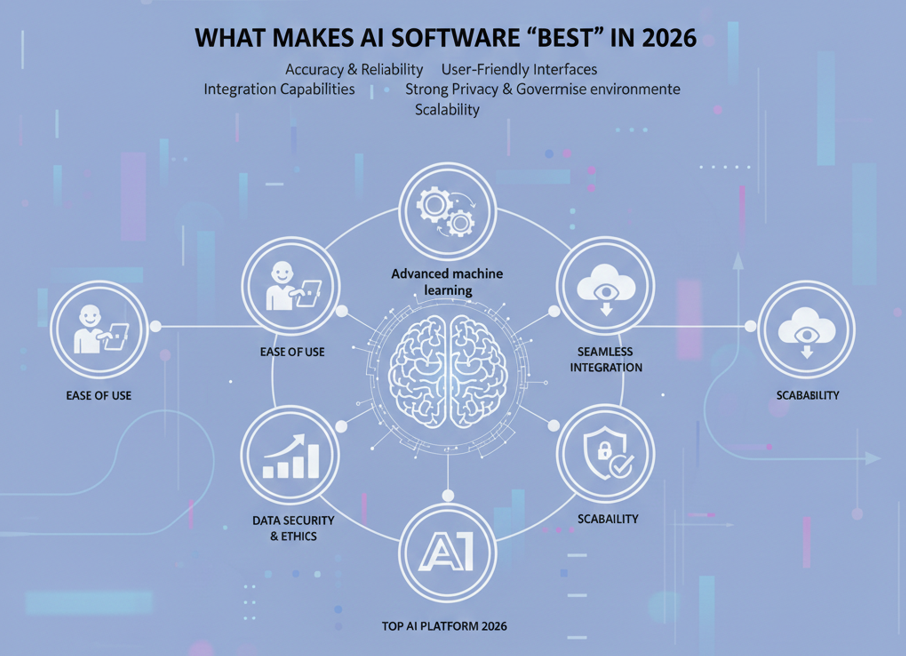
Not all AI tools deliver equal value. The top platforms share several defining characteristics:
- Accuracy and reliability powered by advanced machine learning
- User-friendly interfaces requiring minimal technical skill
- Integration capabilities with existing apps and workflows
- Strong privacy protections and transparent governance
- Scalability from individuals to enterprise environments
Importantly, the best artificial intelligence software 2026 platforms balance automation with human control. Businesses want efficiency—but they also demand trust.
Categories of AI Tools
AI software now spans multiple functional areas:
| Category | Purpose | Typical Users |
|---|---|---|
| Writing & Content | Blogs, emails, SEO | Marketers, students |
| Coding | Code generation, debugging | Developers |
| Design & Media | Images, video, branding | Creators |
| Business Automation | CRM, workflows | Companies |
| Data Analytics | Forecasting, insights | Analysts |
Understanding these categories helps users quickly identify the right solution.
Top AI Writing Assistants
AI writing tools dominate digital workflows. Platforms like ChatGPT and Gemini generate articles, emails, and marketing copy within seconds.
Key Benefits
- Faster content production
- Built-in grammar and tone correction
- SEO keyword optimisation
- Multilingual support
Because of these advantages, content teams can scale output dramatically without sacrificing quality. Naturally, this makes writing assistants central to the best artificial intelligence software 2026 landscape.
Chat-Based AI Platforms
Conversational AI has matured significantly. Modern assistants understand context, memory, and intent. They help users brainstorm ideas, summarise research, and automate communication.
These systems are increasingly embedded in messaging apps, websites, and enterprise dashboards—turning AI into a constant digital companion rather than a separate tool.
Best AI for Business Automation
Automation platforms streamline repetitive work such as:
- Customer support responses
- Lead qualification
- Appointment scheduling
- Document processing
For example, Microsoft Copilot integrates directly into office productivity software, allowing teams to analyse spreadsheets, draft reports, and manage meetings automatically.
Consequently, companies save time while improving accuracy—two essential goals in modern operations.
AI for Developers and Coding
Developers benefit enormously from AI-assisted programming. Code-generation systems can:
- Suggest functions in real time
- Detect bugs instantly
- Translate code between languages
- Produce documentation automatically
This reduces development cycles from weeks to days. As software demand grows, coding AI will remain central to the best artificial intelligence software 2026 ecosystem.
AI Design and Creativity Tools
Creative professionals increasingly rely on AI image and video generation. These tools enable:
- Instant concept art
- Social media graphics
- Marketing videos
- Brand identity mock-ups
Because production costs drop dramatically, small businesses can compete visually with major brands. Creativity is no longer limited by budget—only imagination.
AI in Data Analysis and Decision-Making
Data-driven decision-making defines modern leadership. AI analytics platforms transform raw numbers into:
- Sales forecasts
- Risk predictions
- Customer behaviour insights
- Operational recommendations
Instead of manual spreadsheets, executives receive clear visual dashboards and automated reports. Therefore, analytics engines rank among the best artificial intelligence software 2026 solutions for enterprises.
For deeper reading on AI trends, see this external resource:
https://www.ibm.com/ai
Security and Ethical Considerations
Despite its benefits, AI introduces new risks:
- Data privacy concerns
- Algorithmic bias
- Deepfake misuse
- Regulatory uncertainty
Responsible providers now include transparency reports, safety filters, and compliance frameworks. Ethical AI isn’t just idealistic—it’s essential for long-term trust.
Pricing Trends of AI Software
Pricing models continue evolving:
- Freemium tiers for individuals
- Monthly subscriptions for professionals
- Enterprise licensing with custom support
Competition is lowering costs while increasing capability—good news for users worldwide.
How to Choose the Right AI Tool
Selecting the best solution requires careful evaluation:
- Define your primary goal
- Compare integrations and compatibility
- Test usability with free trials
- Review privacy and compliance policies
- Calculate long-term return on investment
Following this framework ensures you choose wisely rather than impulsively.
Future of AI Software Beyond 2026
Looking ahead, AI will become:
- More autonomous
- More personalised
- More integrated into daily life
Researchers continue pursuing general intelligence, but even current tools already transform productivity. The best artificial intelligence software 2026 may soon evolve into fully collaborative digital partners.
Frequently Asked Questions
1. What is the best artificial intelligence software in 2026?
Top contenders include conversational AI, coding assistants, automation platforms, and analytics tools depending on user needs.
2. Is AI software expensive?
Many tools offer free plans, while professional features require affordable subscriptions.
3. Can small businesses benefit from AI?
Absolutely. AI reduces costs, improves marketing, and automates customer service.
4. Is AI safe to use?
Yes—when providers follow privacy laws and ethical safeguards.
5. Do I need coding knowledge to use AI?
No. Most modern AI tools are designed for beginners.
6. Will AI replace human jobs?
AI will transform jobs rather than eliminate them, creating new opportunities alongside automation.
Conclusion
Artificial intelligence is redefining how people work, create, and communicate. From writing assistants to predictive analytics, the best artificial intelligence software 2026 empowers individuals and organisations to achieve more with less effort.
As innovation accelerates, adopting the right AI tools today isn’t just smart—it’s essential for tomorrow’s success.