
Introduction to the Future of Technology
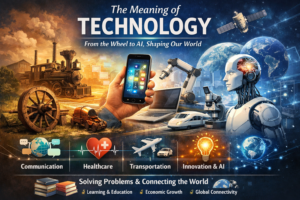
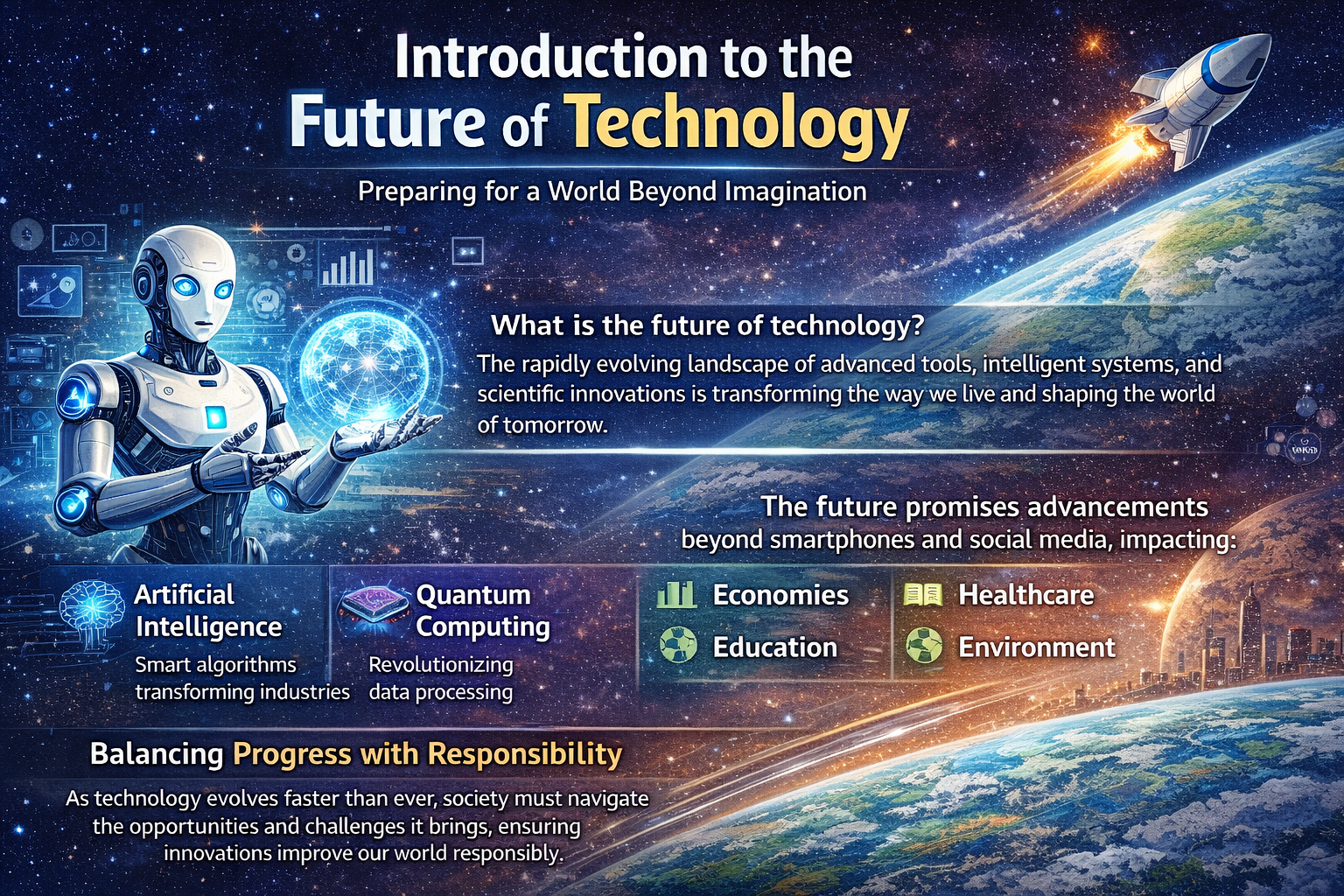
The question what is the future of technology is more important today than ever before. Technology already shapes how we communicate, learn, travel, and even think. However, the coming decades promise changes far beyond smartphones and social media. Artificial intelligence, quantum computing, biotechnology, and space exploration are expected to redefine human civilization.
In simple terms, the future of technology refers to the advanced tools, intelligent systems, and scientific innovations that will transform daily life. These developments won’t just improve convenience; they’ll influence economies, healthcare, education, and the environment. Because of this, understanding technological direction helps individuals prepare for new opportunities and challenges.
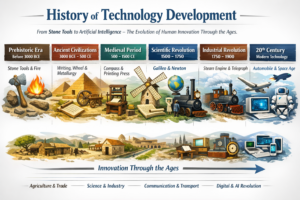
Moreover, technology is evolving faster than at any other time in history. As innovation accelerates, society must balance progress with responsibility. That balance will determine whether technology becomes humanity’s greatest achievement—or its biggest risk.
Why Understanding Future Technology Matters
Understanding what is the future of technology isn’t only for scientists or engineers. It affects students choosing careers, businesses planning growth, and governments shaping policy. In other words, everyone has a stake in technological progress.
First, future technology will redefine employment. Automation and AI may replace repetitive jobs, yet they’ll also create entirely new industries. Second, healthcare breakthroughs could extend life expectancy and improve quality of life. Third, environmental technologies may help combat climate change and resource shortages.
Equally important, digital literacy will become essential. People who understand technology will adapt faster and succeed more easily. Therefore, learning about future trends today is an investment in tomorrow’s stability.
Artificial Intelligence and Smart Automation
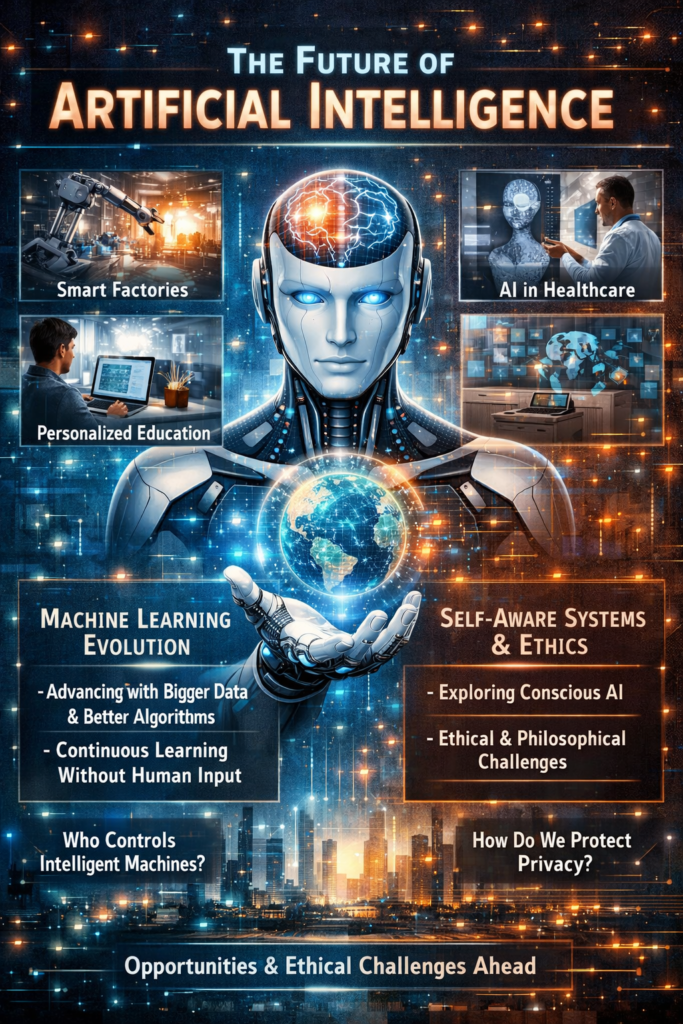
Artificial intelligence stands at the center of discussions about what is the future of technology. AI systems can analyze data, recognize patterns, and make decisions faster than humans. From virtual assistants to medical diagnosis tools, AI is already transforming industries.
In the future, AI will become more autonomous and collaborative. Smart factories may operate with minimal human supervision. Personalized education platforms could adapt to each student’s learning style. Healthcare AI might detect diseases years before symptoms appear.
Yet, AI growth also raises ethical questions. Who controls intelligent machines? How do we protect privacy? Addressing these concerns will shape how safely AI integrates into society.
Machine Learning Evolution
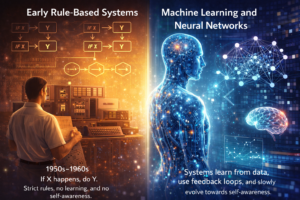
Machine learning, a core branch of AI, continues improving through larger datasets and advanced algorithms. Future systems may learn continuously without human input, making them more flexible and accurate.
Self-Aware Systems and Ethics
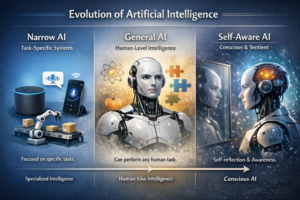
Some researchers explore self-aware AI capable of understanding its own processes. While still theoretical, such systems could revolutionize science—and challenge philosophical ideas about consciousness.
The Rise of Quantum Computing
Quantum computing represents another key answer to what is the future of technology. Unlike classical computers, quantum machines use quantum bits that process multiple possibilities at once. This allows extremely fast problem-solving.
Future quantum computers may revolutionize drug discovery, climate modeling, and cybersecurity. Problems that currently take years could be solved in minutes. However, this power also threatens current encryption systems, requiring new security methods.
Internet of Things and Smart Living
The Internet of Things (IoT) connects everyday devices to the internet, enabling smart homes, smart cities, and intelligent transportation. As IoT expands, daily life will become more automated and efficient.
Imagine homes that manage energy automatically, refrigerators that order groceries, and cities that reduce traffic using real-time data. These innovations show how deeply technology may integrate into routine living.
Future of Communication Technology
Communication technology continues evolving rapidly. High-speed networks, immersive virtual reality, and holographic meetings may soon replace traditional video calls.
Global connectivity will increase collaboration across countries and cultures. Remote work, online education, and digital communities will become even more common. Consequently, geographical distance will matter less than ever before.
For deeper insight into emerging tech trends, visit
https://www.weforum.org
Space Technology and Human Expansion
Space exploration is entering a new era driven by private companies and advanced engineering. Missions to Mars, lunar bases, and asteroid mining are becoming realistic goals.
If successful, space technology could provide new resources and even alternative habitats for humanity. This possibility dramatically expands the meaning of what is the future of technology beyond Earth itself.
Biotechnology and Human Enhancement
Biotechnology merges biology with technology to improve health and human capability. Gene editing, regenerative medicine, and brain-computer interfaces are already under development.
Future breakthroughs may cure genetic diseases, restore damaged organs, and enhance cognitive performance. While promising, these advances also raise moral and social questions about equality and identity.
Green Technology and Sustainable Innovation
Sustainability is a defining theme in what is the future of technology. Renewable energy, electric vehicles, and carbon-capture systems aim to protect the planet while supporting economic growth.
Green innovation ensures that technological progress doesn’t harm future generations. As climate challenges intensify, sustainable technology will become essential rather than optional.
Education in the Age of Technology
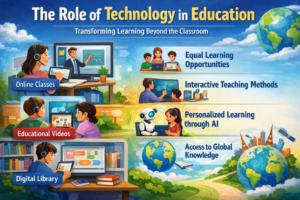
Education is transforming through digital platforms, AI tutors, and immersive simulations. Students can now access global knowledge instantly, making learning more flexible and personalized.
Future classrooms may combine virtual reality with real-world interaction, creating engaging educational experiences. Lifelong learning will also become normal as technology changes job requirements.
Future Jobs and Workforce Transformation
Automation will reshape the workforce dramatically. Routine tasks may disappear, but creative, analytical, and technological roles will expand. Skills like coding, data analysis, and problem-solving will be highly valuable.
Importantly, adaptability will matter more than any single profession. Continuous learning will define career success in the technological future.
Risks, Challenges, and Ethical Concerns
Despite its benefits, technology introduces risks such as privacy loss, cybercrime, unemployment, and inequality. Ethical governance and responsible innovation are necessary to prevent misuse.
Societies must create laws, standards, and global cooperation to manage these challenges effectively.
Global Impact of Future Technology
Technology connects economies, cultures, and governments worldwide. Developing nations may leap forward using digital infrastructure, while global collaboration can solve shared problems.
Ultimately, what is the future of technology depends on human choices. Innovation alone isn’t enough; wisdom and responsibility must guide progress.
FAQs
1. What is the future of technology in simple words?
It refers to advanced innovations like AI, quantum computing, biotechnology, and space exploration that will transform human life.
2. Which technology will grow the fastest?
Artificial intelligence is expected to grow the fastest due to its wide applications.
3. Will technology replace human jobs?
Some jobs will disappear, but many new careers will emerge.
4. How will technology affect daily life?
Life will become more automated, connected, and efficient.
5. Is future technology safe?
It can be safe if developed with strong ethical rules and security.
6. Why should students learn about future technology?
Because future careers will depend heavily on technological skills.
Conclusion
In conclusion, understanding what is the future of technology helps humanity prepare for transformation on an unprecedented scale. From intelligent machines to interplanetary travel, the coming era promises both opportunity and responsibility.
If guided wisely, technology can solve global problems, improve health, expand knowledge, and create a more connected world. The future isn’t something that simply happens—it’s something we build through innovation, ethics, and collective vision.