
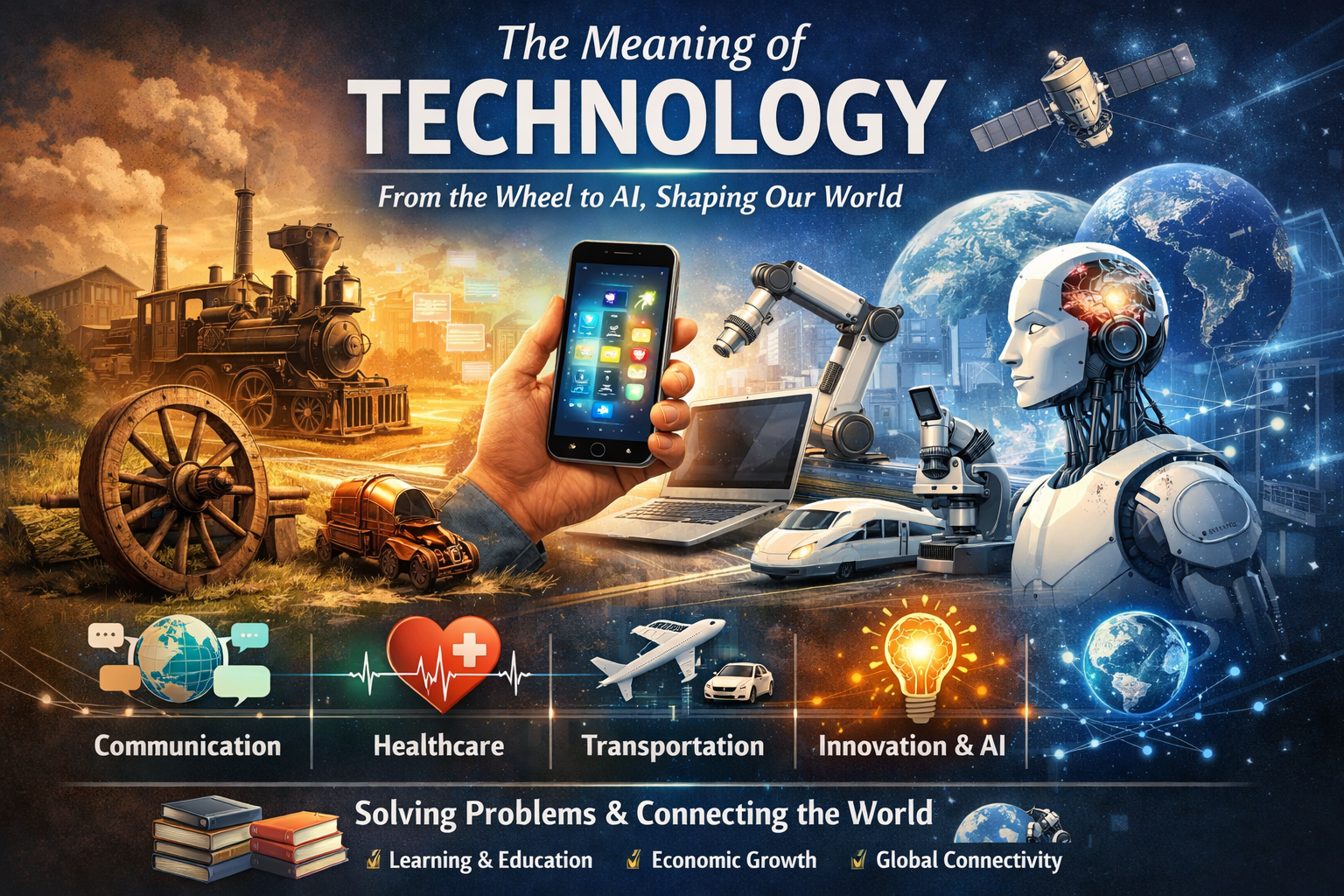
Introduction to the Meaning of Technology
The meaning of technology goes far beyond machines, gadgets, and digital screens. In simple terms, technology refers to the application of scientific knowledge to create tools, systems, and methods that solve problems and make human life easier. From the invention of the wheel to artificial intelligence, technology has continuously shaped civilization.
Today, we can’t imagine life without smartphones, the internet, transportation systems, or medical equipment. Technology influences how we learn, communicate, travel, and even think. Because of this deep impact, understanding the meaning of technology is essential for students, professionals, and society as a whole.
Moreover, technology isn’t just about convenience. It also drives innovation, economic development, and global connection. As the world becomes increasingly digital, the importance of technology continues to grow at an extraordinary pace.
Historical Evolution of Technology
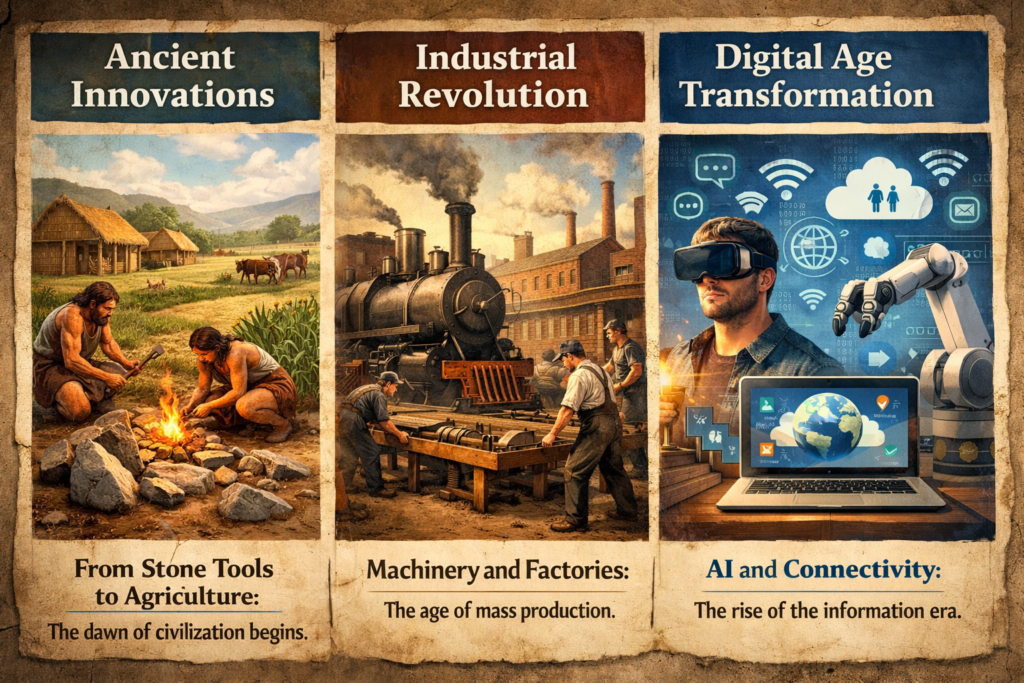
Ancient Innovations
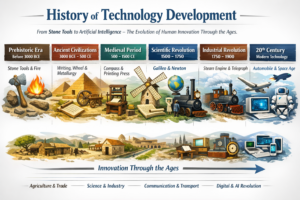
The earliest stage of technology began with simple tools made from stone, wood, and bone. Humans created fire, farming tools, and shelters to survive harsh environments. These inventions may appear basic today, but they laid the foundation for modern progress.
Agriculture was one of the most revolutionary technological shifts. It allowed humans to settle, build communities, and develop civilizations. Without these early technologies, modern society wouldn’t exist.
Industrial Revolution
The Industrial Revolution marked a dramatic turning point in the meaning of technology. Machines powered by steam and electricity replaced manual labor, increasing production and efficiency. Factories, railways, and mechanized tools transformed economies and daily life.
This era also introduced mass manufacturing and urbanization. While it improved living standards, it also created social challenges such as labor exploitation and pollution.
Digital Age Transformation
The late 20th and early 21st centuries introduced computers, the internet, and mobile devices. This digital transformation redefined communication, business, and education.
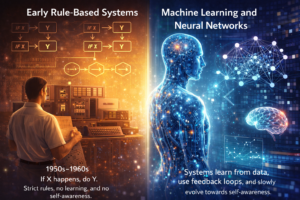
Today, technologies like artificial intelligence, cloud computing, and automation continue to reshape the world. The meaning of technology now includes data, intelligence, and connectivity, not just physical machines.
Core Components That Define Technology
Tools and Machines
At its most visible level, technology includes physical tools such as computers, vehicles, and medical instruments. These devices help humans perform tasks faster and more accurately.
Systems and Processes
Technology also includes organized systems like transportation networks, banking systems, and communication infrastructure. These invisible frameworks keep modern society functioning smoothly.
Knowledge and Innovation
Perhaps the most important aspect of technology is knowledge. Scientific research, engineering, and creativity drive continuous improvement. Without innovation, technology would stop evolving.
Types of Technology in Everyday Life
Information Technology
Information Technology (IT) involves computers, software, databases, and networks. It enables online communication, digital storage, cybersecurity, and cloud services. Businesses rely heavily on IT for efficiency and decision-making.
Communication Technology
Mobile phones, social media, satellites, and video conferencing platforms connect people globally within seconds. Communication technology has transformed relationships, business, and media consumption.
Medical Technology
Modern healthcare depends on advanced machines like MRI scanners, robotic surgery systems, and diagnostic software. These innovations save lives and improve treatment accuracy.
Educational Technology
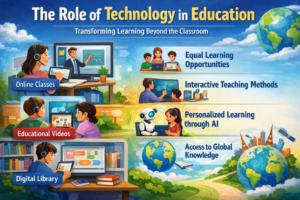
Online learning platforms, smart classrooms, and digital resources make education accessible worldwide. Students can now learn anytime and anywhere.
Benefits of Technology in Modern Society
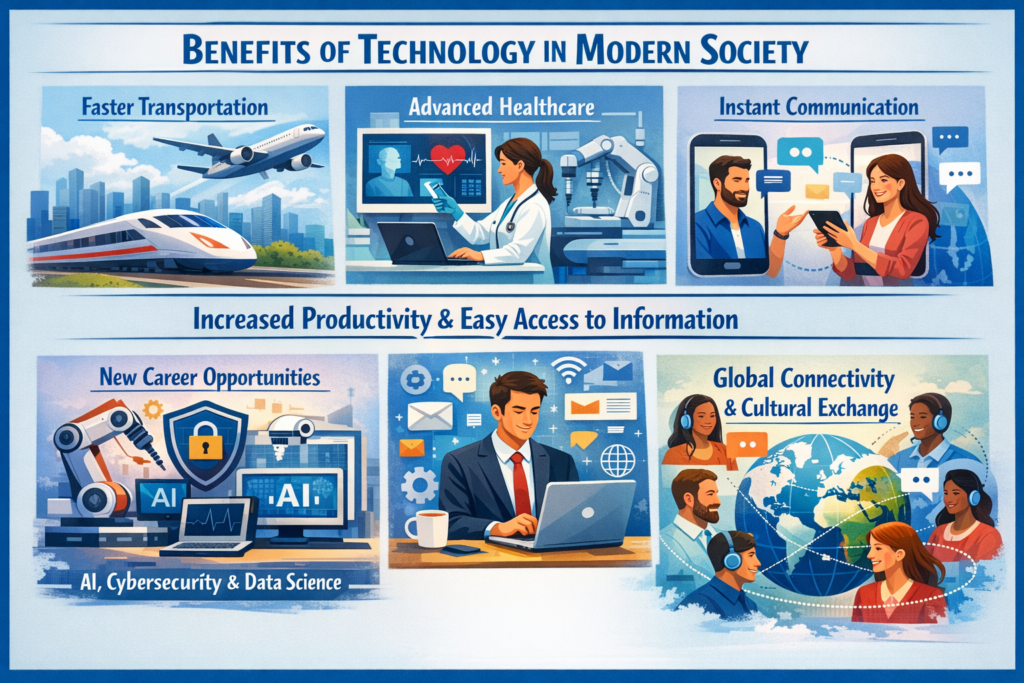
Technology improves productivity, convenience, and quality of life. Transportation is faster, healthcare is safer, and communication is instant. Businesses operate efficiently, and information is available within seconds.
Additionally, technology creates new career opportunities and industries. Fields like artificial intelligence, cybersecurity, and data science are rapidly growing.
Another major advantage is global connectivity. People from different cultures can collaborate, learn, and share ideas easily.
Challenges and Risks of Technology
Despite its advantages, technology also brings challenges. Privacy concerns, cybercrime, and data misuse are serious issues in the digital world.
Automation may replace certain jobs, creating economic uncertainty. Excessive screen time can also affect mental and physical health.
Environmental impact is another concern. Electronic waste and energy consumption contribute to pollution and climate change.
Therefore, responsible and balanced use of technology is essential.
Role of Technology in Economic Growth
Technology drives innovation, increases productivity, and creates global markets. Countries that invest in technology often experience faster economic development.
Digital businesses, e-commerce, and online services generate employment and revenue. Startups can now reach global audiences with minimal cost.
In short, technology is a key engine of modern economies.
Technology and Human Relationships
Technology has transformed how people interact. Social media and messaging apps allow instant communication, even across continents.
However, digital communication sometimes reduces face-to-face interaction. Maintaining a healthy balance between online and offline relationships is important.
Future Trends in Technology
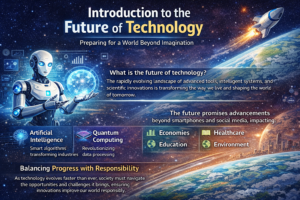
Emerging technologies like artificial intelligence, quantum computing, biotechnology, and renewable energy will shape the future.
Smart cities, autonomous vehicles, and virtual reality may soon become part of daily life. The meaning of technology will continue evolving as innovation accelerates.
Ethical Considerations in Technology
As technology becomes more powerful, ethical questions arise. Issues such as data privacy, AI decision-making, and digital inequality must be addressed.
Responsible innovation ensures technology benefits humanity rather than harming it.
For further reading on global technological development, visit
https://www.weforum.org
Frequently Asked Questions
1. What is the simple meaning of technology?
Technology is the use of scientific knowledge to create tools and systems that solve problems and make life easier.
2. Why is technology important?
It improves communication, healthcare, education, productivity, and economic growth.
3. What are examples of technology?
Smartphones, computers, medical machines, vehicles, and the internet are common examples.
4. Can technology be harmful?
Yes, misuse can cause privacy risks, job loss, health issues, and environmental damage.
5. What is the future of technology?
AI, robotics, renewable energy, and biotechnology are expected to dominate the future.
6. How does technology affect students?
It provides online learning, digital resources, and global knowledge access.
Conclusion
Understanding the meaning of technology helps us recognize its power and responsibility. Technology has transformed human history—from stone tools to intelligent machines—and will continue shaping the future.
While it offers incredible benefits, careful and ethical use is essential. By balancing innovation with responsibility, humanity can ensure technology remains a force for progress, equality, and global well-being.