
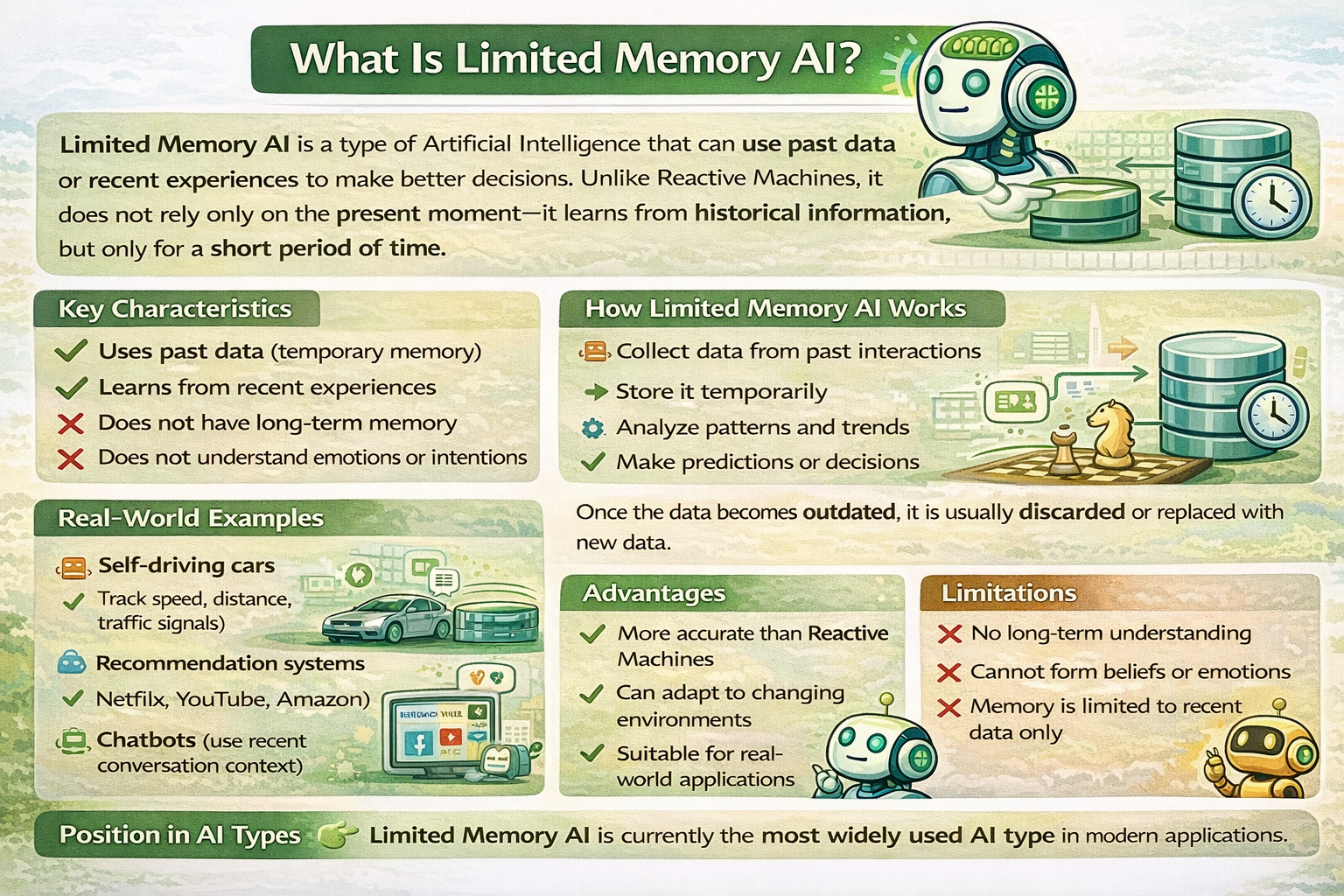
Artificial Intelligence has rapidly evolved over the last decade, and Limited Memory AI sits right at the heart of this evolution. Unlike basic AI systems that react only to current inputs, Limited Memory AI uses historical data to make informed decisions. In other words, it remembers—just not forever.
Today, Limited Memory AI powers technologies we use every single day. From Netflix recommendations to self-driving cars, this AI type plays a crucial role in shaping smarter, safer, and more personalized digital experiences. As a result, understanding Limited Memory AI isn’t just for tech experts—it’s for everyone.
What Is Limited Memory AI?
Definition and Core Concept
Limited Memory AI refers to artificial intelligence systems that can learn from past data for a short period of time to improve future decisions. Unlike humans, this memory isn’t permanent. Instead, it’s task-specific and time-bound.
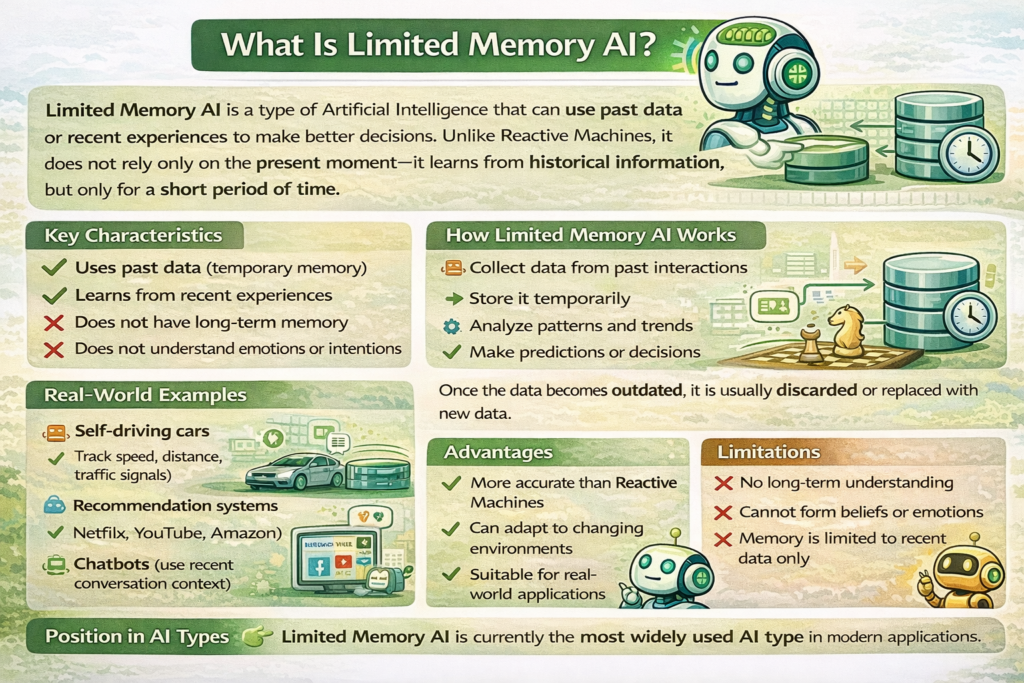
For example, a self-driving car remembers the speed and behavior of nearby vehicles for a few seconds or minutes. That temporary memory helps it decide when to brake, turn, or accelerate.
Why “Limited Memory” Matters
The word limited is key here. These systems don’t build lifelong experiences or emotions. Instead, they:
- Store relevant historical data
- Use it to improve accuracy
- Discard outdated information
This balance keeps AI systems efficient, fast, and safe.
How Limited Memory AI Works
Data Collection and Storage
Limited Memory AI begins with data—lots of it. Sensors, user interactions, logs, and previous outcomes all feed into the system. However, the data is stored only for a defined duration or purpose.
Learning From Historical Data
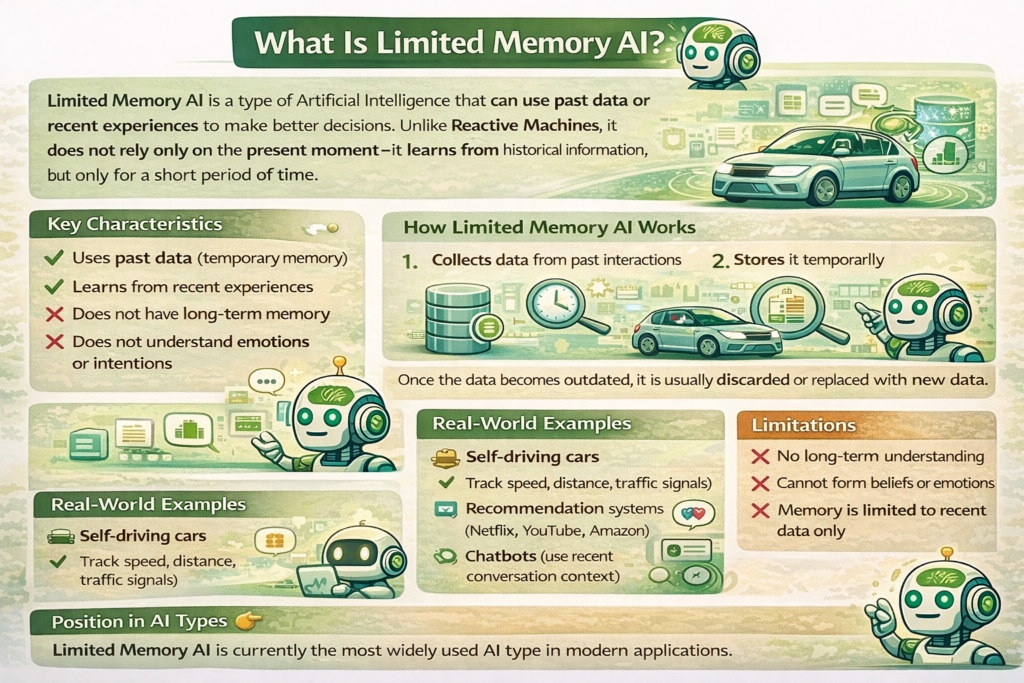
Next, machine learning models analyze patterns in the stored data. Over time, the system learns correlations and trends. This learning allows Limited Memory AI to adapt instead of repeating the same mistakes.
Decision-Making Process
Finally, the AI combines current input with recent memory. This hybrid approach leads to smarter decisions. Once the task is completed, unnecessary data is often deleted, ensuring efficiency and privacy.
Key Characteristics of Limited Memory AI
Limited Memory AI stands out because of these defining traits:
- Uses historical data temporarily
- Improves performance over time
- Relies on machine learning algorithms
- Does not possess self-awareness
- Operates within predefined boundaries
As a result, it’s both powerful and controllable.
Types of AI and Where Limited Memory AI Fits
Artificial Intelligence is often categorized into four types:
- Reactive Machines
- Limited Memory AI
- Theory of Mind AI
- Self-Aware AI
Among these, Limited Memory AI is the most widely used today. It bridges the gap between simple reaction-based systems and future human-like intelligence.
Real-World Examples of Limited Memory AI
Self-Driving Cars
Autonomous vehicles are one of the best examples of Limited Memory AI. They:
- Track nearby vehicles
- Remember recent traffic patterns
- Adjust driving behavior accordingly
Companies like Tesla and Waymo rely heavily on Limited Memory AI to improve road safety. You can explore more about autonomous driving research at ****.
Recommendation Systems
Ever wondered how Netflix seems to “know” what you like? That’s Limited Memory AI at work. It analyzes your recent viewing history to suggest relevant content.
Virtual Assistants
Alexa, Siri, and Google Assistant use Limited Memory AI to remember recent commands. This allows more natural, conversational interactions.
Benefits of Limited Memory AI
Limited Memory AI offers several advantages:
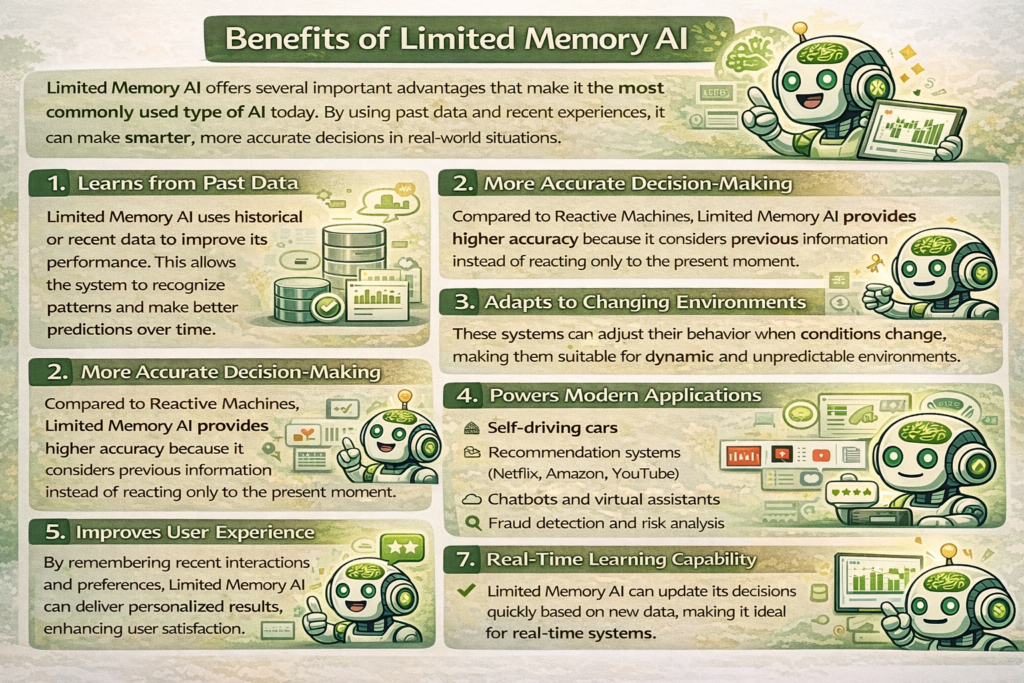
- Improved accuracy through learning
- Personalized user experiences
- Enhanced safety, especially in automation
- Scalability across industries
Moreover, it continuously evolves, making systems smarter with time.
Limitations and Challenges
Despite its strengths, Limited Memory AI has drawbacks:
- Cannot understand emotions
- Depends heavily on data quality
- Potential bias in training data
- Limited contextual understanding
Therefore, human oversight remains essential.
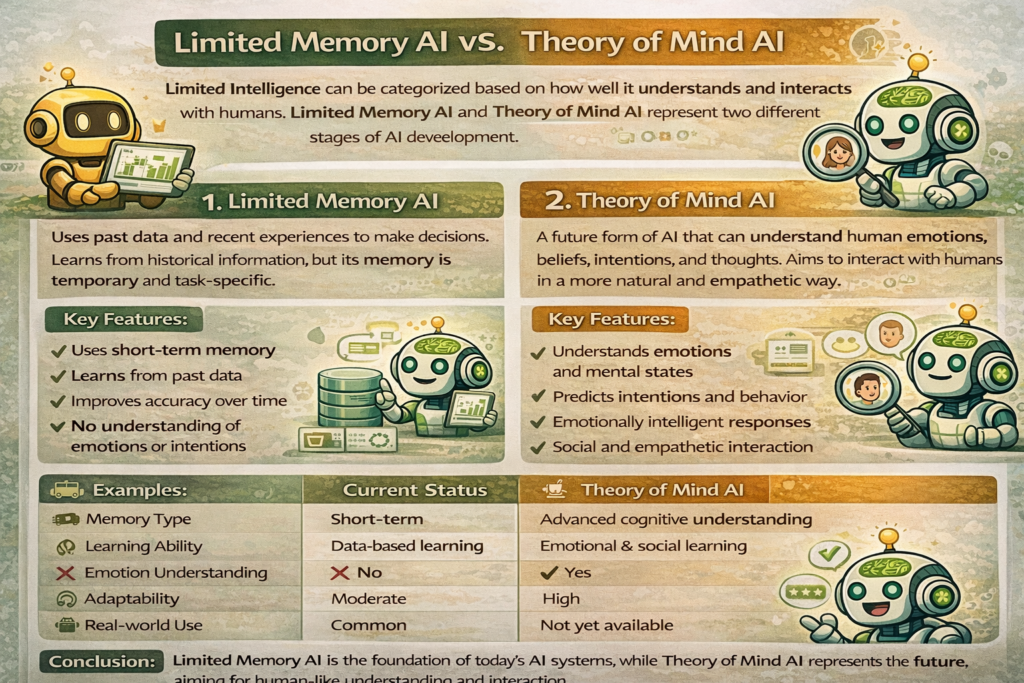
Limited Memory AI vs Reactive Machines
| Feature | Reactive Machines | Limited Memory AI |
|---|---|---|
| Memory | None | Short-term |
| Learning | No | Yes |
| Adaptability | Low | High |
| Examples | Chess AI | Self-driving cars |
Clearly, Limited Memory AI is a significant upgrade.
Limited Memory AI vs Theory of Mind AI
Theory of Mind AI aims to understand emotions and intentions. However, it’s still theoretical. In contrast, Limited Memory AI is practical, reliable, and already in use.
Role of Limited Memory AI in Modern Industries
Limited Memory AI is transforming industries like:
- Healthcare (predictive diagnostics)
- Finance (fraud detection)
- E-commerce (personalized shopping)
- Manufacturing (predictive maintenance)
Its impact continues to grow.
Ethical Considerations and Data Privacy
Since Limited Memory AI relies on data, ethical concerns arise. Companies must ensure:
- Transparent data usage
- Strong security measures
- Compliance with privacy laws
Responsible AI development builds trust.
Future Scope of Limited Memory AI
Looking ahead, Limited Memory AI will become:
- More efficient
- More explainable
- Better integrated with human workflows
While it won’t replace humans, it will definitely enhance human decision-making.