Introduction to AI vs Human Intelligence
The debate around AI vs human intelligence has become one of the most important discussions of the 21st century. As artificial intelligence continues to evolve at lightning speed, many people wonder whether machines will ever match—or even surpass—human intelligence. This topic isn’t just about technology; it’s about society, ethics, jobs, creativity, and the future of humanity itself.
In simple terms, AI vs human intelligence compares machine-based problem-solving with the natural cognitive abilities of humans. While AI excels at speed and data processing, human intelligence shines in creativity, emotional understanding, and moral reasoning. So, who really wins? The honest answer is more nuanced than a simple comparison.
Understanding Artificial Intelligence
What Is Artificial Intelligence?
Artificial Intelligence (AI) refers to machines or software systems designed to mimic human intelligence. These systems can learn from data, recognize patterns, make decisions, and even improve their performance over time. When people talk about AI vs human intelligence, AI represents logic-driven, data-powered thinking.
AI works using algorithms, neural networks, and massive datasets. Unlike humans, AI doesn’t “think” or “feel.” Instead, it processes information based on predefined rules and learned patterns.
Types of Artificial Intelligence
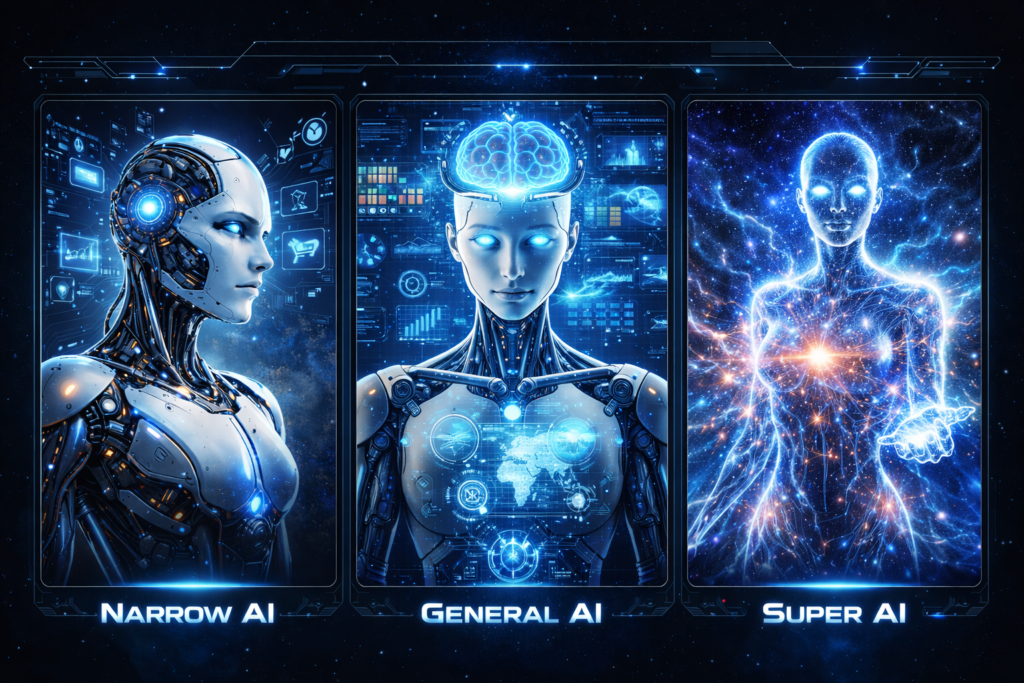
Narrow AI
Narrow AI is designed for a specific task. Examples include voice assistants, recommendation systems, and image recognition tools. Most AI systems today fall into this category.
General AI
General AI aims to perform any intellectual task a human can do. This level of AI doesn’t exist yet, but it’s often discussed in AI vs human intelligence debates.
Super AI
Super AI is a hypothetical concept where machines surpass human intelligence in every field, including creativity and emotional understanding. This idea raises serious ethical and philosophical questions.
Understanding Human Intelligence
Definition of Human Intelligence
Human intelligence is the natural ability of humans to learn, reason, adapt, understand emotions, and apply knowledge creatively. In the context of AI vs human intelligence, human intelligence is holistic—it combines logic, emotion, experience, and intuition.
Humans don’t just process data; they interpret meaning, values, and context. This makes human intelligence deeply flexible and adaptive.
Components of Human Intelligence
Emotional Intelligence
Emotional intelligence allows humans to understand emotions, build relationships, and show empathy. This is a major advantage in AI vs human intelligence, as machines struggle with genuine emotional understanding.
Creative Intelligence
Humans can imagine new ideas, art forms, and solutions without existing data. Creativity remains a uniquely human strength, at least for now.
AI vs Human Intelligence: Core Differences
Learning Ability
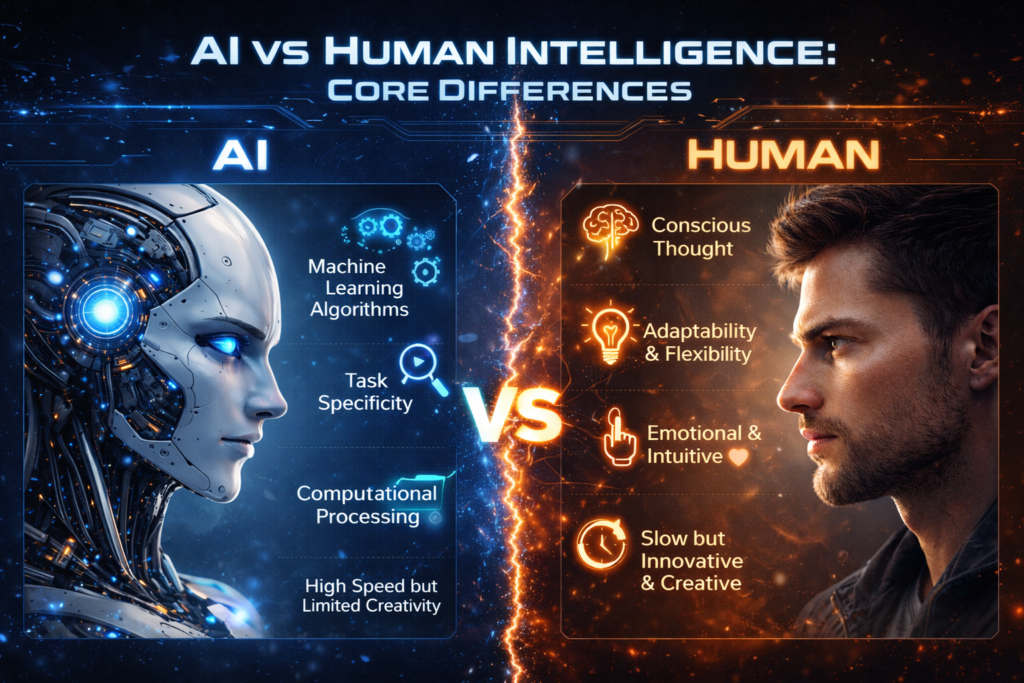
AI learns from vast amounts of data and improves through machine learning. Humans learn through experience, observation, and emotional feedback. While AI learns faster, humans learn more deeply and contextually.
Decision-Making Process
AI decisions are data-driven and objective. Human decisions involve emotions, ethics, and personal values. In AI vs human intelligence, this difference is crucial, especially in sensitive fields like law and healthcare.
Creativity and Innovation
AI can generate content based on patterns, but humans create original ideas driven by imagination and emotion. True innovation still heavily depends on human intelligence.
Strengths of Artificial Intelligence
AI offers several powerful advantages:
- Processes massive data quickly
- Works 24/7 without fatigue
- Reduces human error
- Scales efficiently across industries
In the AI vs human intelligence discussion, AI clearly dominates in speed, accuracy, and consistency.
Strengths of Human Intelligence
Human intelligence excels where machines fall short:
- Emotional understanding
- Moral reasoning
- Creativity and intuition
- Adaptability in uncertain situations
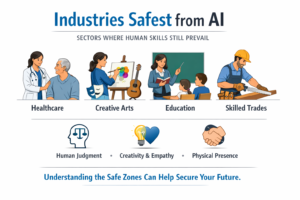
These strengths ensure humans remain essential despite rapid AI advancement.
Limitations of AI
Even with rapid progress, AI has limits:
- Lacks true understanding and consciousness
- Depends heavily on data quality
- Cannot make ethical judgments independently
These limitations highlight why AI vs human intelligence is not a zero-sum game.
Limitations of Human Intelligence
Humans also have weaknesses:
- Slower data processing
- Prone to bias and fatigue
- Limited memory capacity
This is where AI complements human intelligence rather than replacing it.
AI vs Human Intelligence in Real Life Applications
Healthcare
AI assists in diagnosis and data analysis, while doctors provide empathy and final judgment. Together, they outperform either alone.
Education
AI personalizes learning, but teachers inspire, mentor, and emotionally support students.
Business and Industry
AI optimizes operations, while humans lead strategy and innovation. This collaboration defines modern success.
Ethical Considerations in AI vs Human Intelligence
Ethics play a huge role in the AI vs human intelligence debate. Questions about privacy, bias, accountability, and job displacement must be addressed. According to research from organizations like the World Economic Forum , responsible AI development is essential for a balanced future.
The Future of AI and Human Intelligence
The future isn’t about AI replacing humans. Instead, it’s about collaboration. AI will handle repetitive tasks, while humans focus on creativity, leadership, and emotional intelligence. In the long run, AI vs human intelligence becomes AI + human intelligence.